Türkiye’s bases to protect Syria: What awaits Russia’s Aerospace Forces?


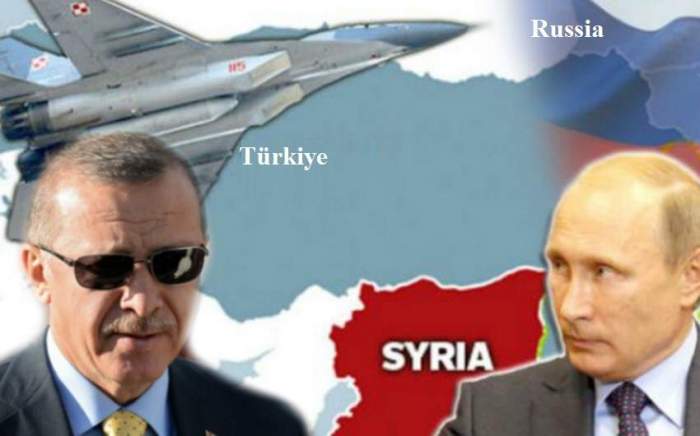
By Tural Heybatov
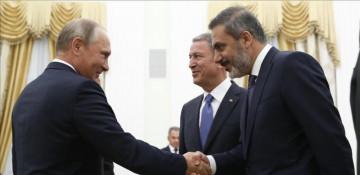
It seems that Syria’s fate has already been decided—this time, not by external players but by its own authorities. However, no government can manage without allies, especially in such a complex region and under such challenging circumstances. The new Syrian leadership has already chosen its partners. In early February, Syria’s interim president, Ahmed al-Sharaa, made his first official foreign visit to Saudi Arabia and then traveled to Ankara. Notably, Türkiye was the first country to send its foreign minister to Damascus—Hakan Fidan held talks with al-Sharaa as early as December.
Although the new Syrian president visited Saudi Arabia first, it is Ankara from whom he expects real support. To protect Syria’s borders—especially its frontier with Israel—he has requested Türkiye’s assistance in supplying drones, additional radar systems, electronic warfare systems, and air defense infrastructure along the borders.
Recently, representatives of Türkiye’s Ministry of Defense visited Syria, and according to Turkish media, an agreement is expected to be signed soon. Reports indicate that the Syrian authorities have officially chosen Türkiye as their key military partner, a decision that was widely anticipated. Damascus has offered Ankara the opportunity to establish military bases in Syria and to train the Syrian army. Given the professionalism and high combat readiness of the Turkish armed forces and weaponry, observers believe the new Syrian leadership has made the right choice.

Establishing Türkiye’s military bases in Syria
Two Turkish military bases are expected to be established in Syria. The agreement will also include provisions for training Syrian Air Force pilots. To support this effort, 50 F-16 fighter jets will be stationed at two Turkish bases until the Syrian Air Force is fully operational. The bases are expected to be located in the central desert region of Syria, known as Badiya. Among the proposed locations are a military airfield near Palmyra and the T4 airbase near the town of Tiyas.
There have been reports in Russian media suggesting that Syria has offered Türkiye the possibility of setting up bases in locations previously used by Russian forces. Notably, Türkiye already maintains military bases in northern Syria near its border, primarily for countering Kurdish formations that pose a security threat to Ankara.
The uncertain fate of Russian bases
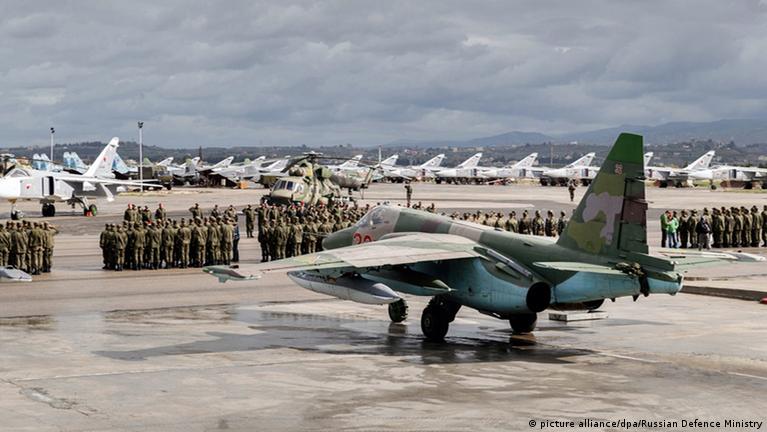
While Türkiye’s growing military presence in Syria appears to be a settled matter, the fate of Russian bases remains uncertain. Russian Deputy Foreign Minister Mikhail Bogdanov previously stated that the future of Russian military bases in Syria requires further negotiations.
Moscow currently maintains a naval base in the port of Tartus and an airbase near the port city of Latakia. Both are located on the Mediterranean coast, over 150 kilometers away from Tiyas and Palmyra. However, it is important to remember that Russia also previously had a presence at the bases that Syria is now offering to Türkiye. The Tiyas base was also home to pro-Iranian forces. While there were attempts to convert the Palmyra airfield into a fully functional military base, it never reached full operational capacity.
The Khmeimim Airbase remains the key logistical hub for Russian forces in the Mediterranean and North Africa. Both Tiyas and Khmeimim were leased to Russia in 2017 for a period of 49 years. Furthermore, the Russian Aerospace Forces (VKS) have been operating in Syria since September 2015, when Moscow launched its military intervention in support of the Syrian government. Under an agreement signed between Russia and Syria in August 2015, the VKS is stationed in Syria indefinitely. Russia’s military contingent in Syria includes fighter jets, bombers, attack aircraft, combat helicopters, and other military assets.
Russia’s last stand in Syria?
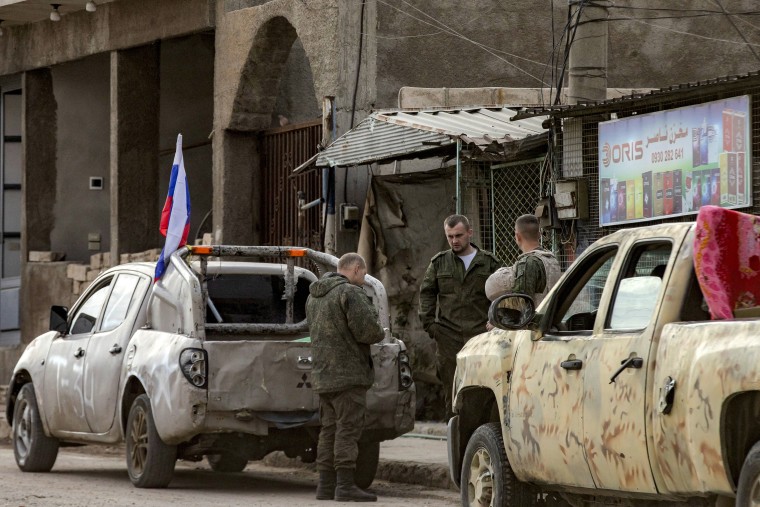
Russia does not want to withdraw from Syria entirely and hopes to maintain at least a foothold in the country. For its part, Damascus is refraining from making drastic moves, keeping open the possibility of restoring relations with Moscow while prioritizing its own interests. As Syria’s transitional defense minister, Murhaf Abu Kasra, stated in an interview with The Washington Post, Russian bases may remain in Syria, but only if it is in Syria’s best interest.
However, Russia is not the only party concerned about the future of its bases. European Union leaders have already indicated that they will only engage in dialogue with Syria’s new leadership if Russian bases are withdrawn. EU foreign policy chief Kaja Kallas has explicitly stated that she will convey this position to Syria’s new government during diplomatic talks. She has also expressed the view that Iran and Russia should have no role in Syria’s future and that the EU should become the primary donor of aid to the new authorities in Damascus.
Ultimately, Türkiye’s position will likely be the decisive factor. Ankara has no interest in allowing Russian military bases to remain in Syria, and if Türkiye does not approve of their presence, it is unlikely that Damascus will either.


Similar news