West vs Russia: The battle for influence in Georgia's elections


.jpg)

On October 26, Georgians will cast their votes in a pivotal parliamentary election, marking the country's first fully proportional representation. Only parties that achieve a minimum of 5 percent of the vote will gain seats. The election follows months of political turmoil, including a series of controversial moves by the ruling Georgian Dream party, such as the passage of the Law on Transparency of Foreign Influence, more commonly known as the “foreign agents bill,” which triggered large-scale protests.
The eagerly awaited election is being held at a time when Georgian society is at a crossroads between the EU and Russia, with most of the population aspiring to the constitutional objective of achieving Euro-Atlantic integration.These are also the first elections since Georgia was granted EU candidate status in 2023. However, after the adoption of the “foreign agents law,” the EU has de facto halted Georgia’s accession process.
In its turn, t he United States has decided to suspend financial aid to the country, amounting to over $95 million. This decision marked a significant turning point in U.S.-Georgian relations and could have substantial implications for Georgia's foreign economic policy.
Furthermore, on October 15, the UK Ambassador to Tbilisi, Gareth Ward, announced that the United Kingdom has decided to freeze the Wardrop Dialogue with Georgia at the ministerial level and cancel planned defense staff talks between the two countries.
“For the first time in 10 years, we on the British side have decided to freeze the annual high-level 'Wardrop Dialogue' between ministers. This is the first time since the dialogue format was established. We also canceled the planned high-level talks between the defense staff and suspended the new cyber security program,” the ambassador stated.
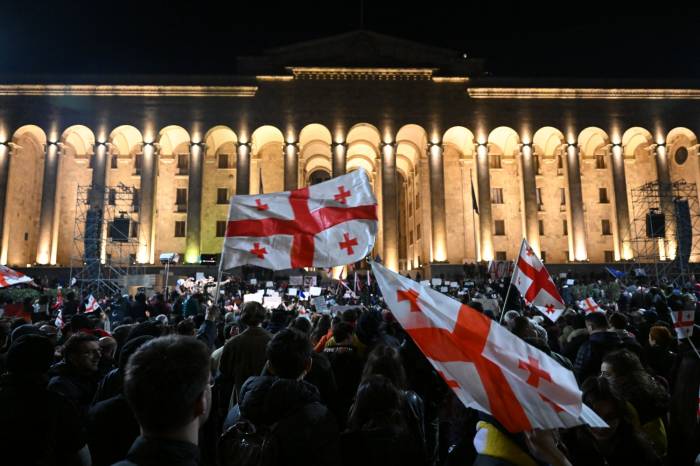
While the upcoming election is significant in meaning, it is also unique in several other aspects. These will be the first fully proportional elections in Georgia, as well as the first electronic elections, with about 90% of voters casting their ballots through electronic machines installed at polling stations.
To mobilize its supporters, the ruling Georgian Dream party said it seeks a super-majority, which it will use to ban opposition parties, further restrict LGBT rights, and restore territorial integrity. The ruling party has portrayed the upcoming election as a ‘choice between war and peace.’
Promising to ensure the country’s return to a pro-Western course, opposition parties, namely Girchi - More Freedom, Droa, Lelo for Georgia, Strategy Aghmashenebeli, and Ahali, have signed a Unity Declaration in a historic move ahead of the election.
As the election approaches, the security landscape in Georgia looms large, casting a shadow over the electoral process. First and foremost, the geopolitical context cannot be ignored. The ongoing tensions with Russia, particularly in light of the Ukraine conflict, heighten the risk of external interference and destabilization efforts. Moreover, Russia and the West are exchanging sharp accusations of meddling in Georgia’s electoral process.
On one side, Russia is accusing Western powers, particularly the United States and the European Union, of attempting to influence the election to bolster pro-Western factions within Georgia. The Russian Foreign Intelligence Service (SVR) earlier claimed that the US is planning to orchestrate a color revolution in Georgia to prevent the ruling Georgian Dream party from securing victory. The SVR stated that the US plan involves presenting evidence of election fraud, refusing to recognize the election results, and demanding a change of government.
Conversely, the West has countered these claims by highlighting Russia's long-standing efforts to destabilize Georgian politics. From disinformation campaigns to covert support for certain political groups, Moscow’s actions are often framed as a threat to Georgia's democratic aspirations.
A few days ago, Bidzina Ivanishvili, the founder of Georgian Dream, said forces that acted on instructions from abroad to overthrow the government of Georgia back in 2003 want to stage another coup in the country.
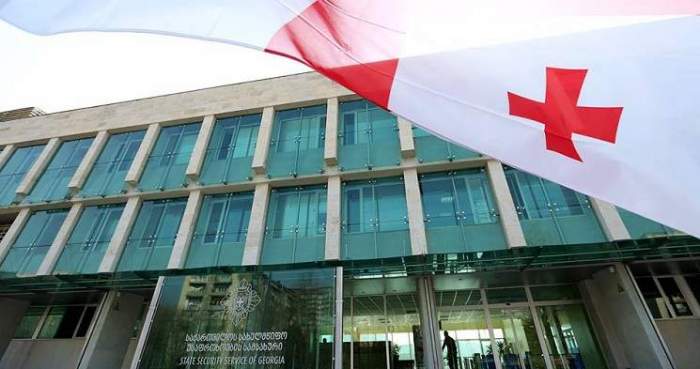
On October 16, the Georgian State Security Service issued a warning that some citizens are planning to release fake audio and video recordings involving government officials to destabilize the country ahead of the parliamentary election. The Service underscored that the main goal of this provocation is to artificially create protests in the country, which will ultimately be used for political purposes.
In conclusion, it is essential for Georgians to prioritize their own voices over external narratives. The election should be a platform for addressing pressing issues and envisioning a future that reflects the will of the people. By embracing this moment as an opportunity for renewal and engagement, Georgia can chart a path toward a more democratic, prosperous, and unified future.
(If you possess specialized knowledge and wish to contribute, please reach out to us at opinions@news.az).


Similar news