At least 10 dead as gas blast collapses building in Pakistan


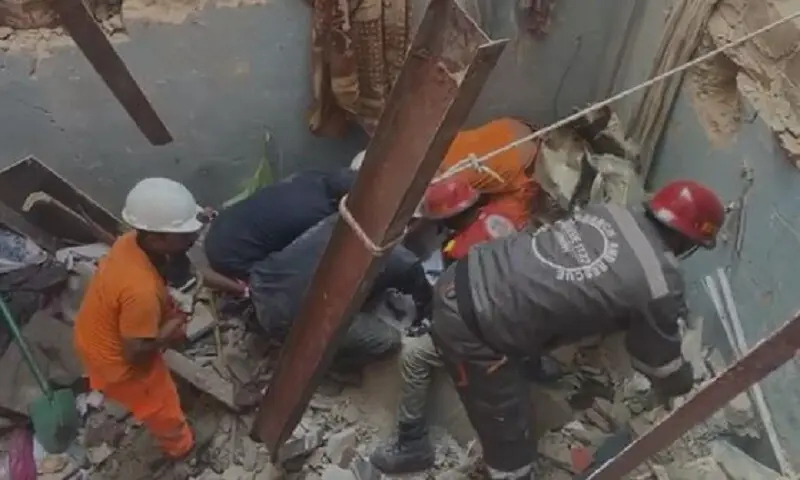
At least 10 people, including women and children, were killed and 11 others injured after a suspected gas explosion triggered the partial collapse of a residential building in the Soldier Bazaar area of Karachi, Pakistan, according to rescue officials.
The explosion occurred at a house in Gul Rana Colony within Soldier Bazaar. Victims — both deceased and injured — were transported to Civil Hospital for treatment, News.Az reports, citing Pakistani media.
A spokesperson for District East police said initial reports indicate the blast was caused by a gas leak, which led to part of the structure caving in.
RECOMMENDED STORIES
Rescue 1122 confirmed that search and rescue operations are still underway. An urban search and rescue team, along with a disaster response vehicle, has been deployed at the site to locate any remaining victims trapped under the rubble.
Police said a large contingent of officers and emergency responders arrived shortly after the incident was reported. Authorities cordoned off the area and heightened security measures while rescue teams began clearing debris and searching for survivors.
The tragedy comes amid a series of similar incidents in the city. In July 2025, at least 27 people lost their lives and 10 others were injured when a five-storey building collapsed in the Lyari area. The structure had previously been declared unsafe due to its deteriorating condition.
In August 2025, four workers of the Awami National Party were injured — one critically with severe burns — after a gas explosion caused the collapse of their office in Orangi Town.
At the time, the Sindh Building Control Authority reported that 588 buildings across Karachi had been classified as dangerous.
Building and roof collapses remain a recurring problem in Pakistan, largely attributed to poor construction standards and the use of substandard materials. However, Karachi — a city of more than 20 million residents — is particularly vulnerable due to illegal extensions, ageing infrastructure, overcrowding, and weak enforcement of building regulations.
By Nijat Babayev


Similar news