Azerbaijan builds an energy safety cushion


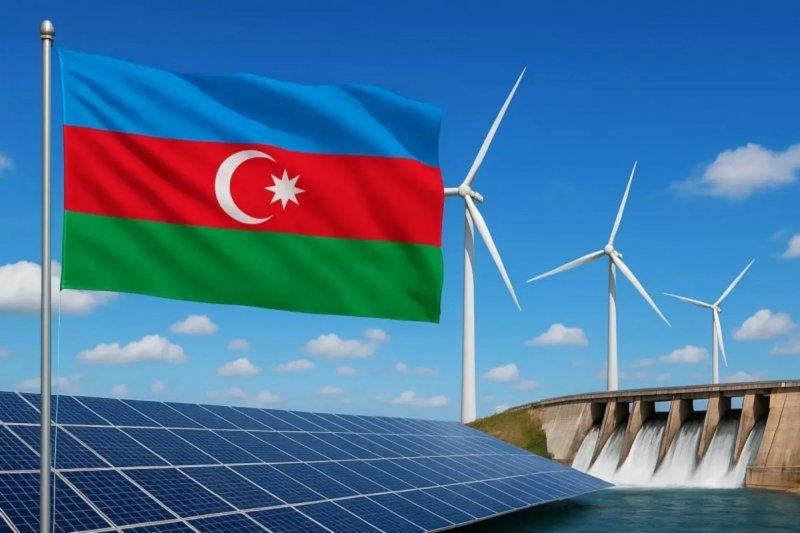
Azerbaijani President Ilham Aliyev on March 25 attended the opening of the Absheron Battery Energy Storage Centre, developed by the country’s largest electricity producer and transmission system operator, AzerEnerji.
Large-scale facilities with a total capacity of 250 MW and an energy storage capacity of 500 MWh have been established at the 500 kV Absheron substation and the 220 kV Agdash substation. These are the largest battery energy storage system (BESS) facilities in the CIS region.
As part of the project, 50 battery units and 13 inverter containers have been installed at the Absheron site. A study conducted by international consulting companies – the US-based Tetra Tech and Türkiye’s EPRA – demonstrated the need for such battery systems in Azerbaijan to safely integrate nearly 1,850 MW of renewable energy into the national grid.
The equipment was supplied by the Great Power plant in China.
The issue of energy security has long been a global concern. Recent developments in the Middle East and the looming energy crisis have made it particularly acute. As risks increase, so does demand for energy. This applies not only to fossil fuels but also to electricity generated from renewable sources. Amid disrupted supply chains and uncertainty over stabilisation in conflict zones, Azerbaijan is becoming increasingly sought-after as an alternative supplier. However, the country must first and foremost ensure its own energy security. As global practice shows, battery energy storage systems are a key part of the solution.
Source: APA
In January, at the official opening ceremony of the Khizi–Absheron wind power plant, President Aliyev stated: “As for future plans, given that our renewable energy potential will increase significantly, we must, of course, create infrastructure for its storage. For this purpose, a battery-based energy storage system is being created in our country for the first time. The capacity of the first project is 250 MW. It is being implemented by AzerEnerji at its own expense. However, our growing potential will require a further expansion of such systems, and I invite foreign investors to join this effort.”
RECOMMENDED STORIES
The implementation of the BESS project in Azerbaijan became known in September last year. It was reported that battery storage systems are crucial for increasing the resilience of the energy system, stabilising frequency, reducing interruptions in renewable energy generation, compensating for active power deficits, covering peak demand, smoothing load curves after sunset, and restoring the energy system from scratch in emergencies. The introduction of these systems is expected to strengthen Azerbaijan’s energy independence and ensure reliable grid operation both in synchronous mode with neighbouring countries and in isolated mode.
At the Green Energy Week 2025: Azerbaijan and Central Asia event held in Baku last September, Engel Taştan, regional manager of the Chinese company GoodWe for Türkiye and Central Asia, said that Azerbaijan is considered one of the promising markets for BESS-based energy storage systems. According to him, one of the key factors influencing investor decisions is the high level of energy production and stable grid operation.
In this regard, Azerbaijan has significant potential for the development of battery storage systems. Once solar and wind energy projects are launched and stabilised, BESS can be used for grid balancing and other market needs, Taştan noted.
One of the advantages of BESS is its high charging speed, with batteries able to be fully charged within two hours. It can be confidently stated that such facilities will make Azerbaijan’s energy system more resilient. These systems create a “safety cushion” and help prevent energy shortages. BESS stores energy when it is cheaper or more abundant – for example, during the day from solar panels. As is well known, solar and wind power depend on natural conditions, making their generation intermittent. These systems help smooth out such fluctuations and ensure an uninterrupted energy supply for households, industry and transport.
It is no coincidence that energy storage systems are becoming increasingly widespread worldwide.
In December 2025, one of the world’s largest energy storage systems – the Melbourne Renewable Energy Hub – became operational in Australia. The facility has a storage capacity of 1.6 GWh and a power output of 600 MW, enough to supply electricity to up to 200,000 homes during evening peak demand.
In 2025, large energy storage systems were also commissioned in Bulgaria and Saudi Arabia. The Saudi project, with a capacity of 500 MW and storage of 2,000 MWh, became the world’s largest single-phase energy storage centre. However, it held this status only briefly, as China launched a BESS of similar scale. Saudi Arabia continues to expand its capacity. In February 2025, Saudi Electricity Company signed a contract with BYD Energy Storage to supply systems with a total capacity of 12.5 GWh for five projects in the kingdom. This agreement will help Saudi Arabia achieve its goal of generating half of its energy from renewable sources by 2030. The system will become the largest of its kind globally, surpassing by four times the hybrid energy complex launched in California in 2024, which combines solar power and storage systems with a capacity of around 3.287 GWh.
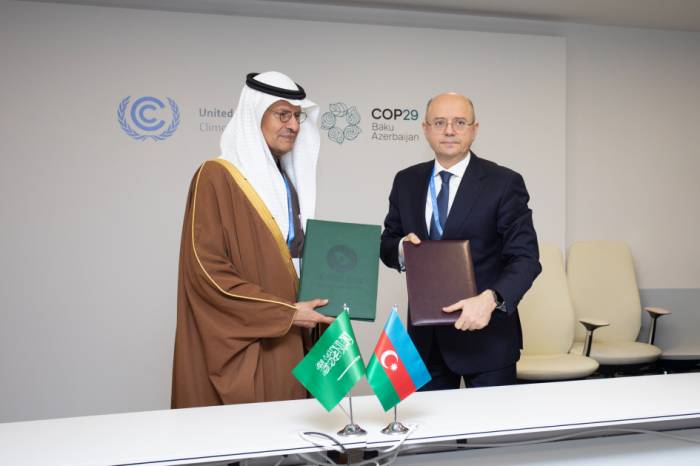
Source:The Ministry of Energy of Azerbaijan
Although the BESS facilities being developed in Azerbaijan cannot compete with the largest global battery centres, their combined capacity will exceed the volume of energy storage in the European Union. In addition, in terms of storage capacity, the Absheron project is not far behind Europe’s largest BESS facility in the United Kingdom, which has a capacity of 300 MW/600 MWh.
Azerbaijan has significant renewable energy resources. The country receives more solar radiation annually than many other regions. By 2027, Azerbaijan plans to implement a programme to integrate more than 2 GW of solar and wind power plants into the grid. As part of this initiative, one of the country’s largest energy hubs – the 500/330 kV Navai substation – is being constructed and will serve as the main distribution centre. High-voltage transmission lines of 500 kV and 330 kV will be laid from this hub to various regions.
During the inauguration of the Absheron energy storage centre, the head of state was also briefed on the completion of the main phase of the AZURE project. The project aims to ensure the sustainable and secure integration of 2 GW of renewable energy into Azerbaijan’s power system, increase the share of green energy in Baku’s electricity supply, including the Alat Free Economic Zone, and provide a direct connection of the 500/330 kV Navai Green Energy Hub to the national grid.
Today, global energy trends are shifting once again. The vilification of fossil fuels has eased amid the emerging crisis. It has become clear that a rapid transition to renewable energy will not happen overnight and must be approached gradually. Before moving away from the most reliable energy sources, it is necessary to build a safety cushion. The Absheron energy storage centre inaugurated by the president serves precisely this purpose and can be seen as Azerbaijan’s contribution to tackling climate change.


Similar news