COMMENT: Why President Ilham Aliyev’s visit to Serbia matters for the Balkans


.png)
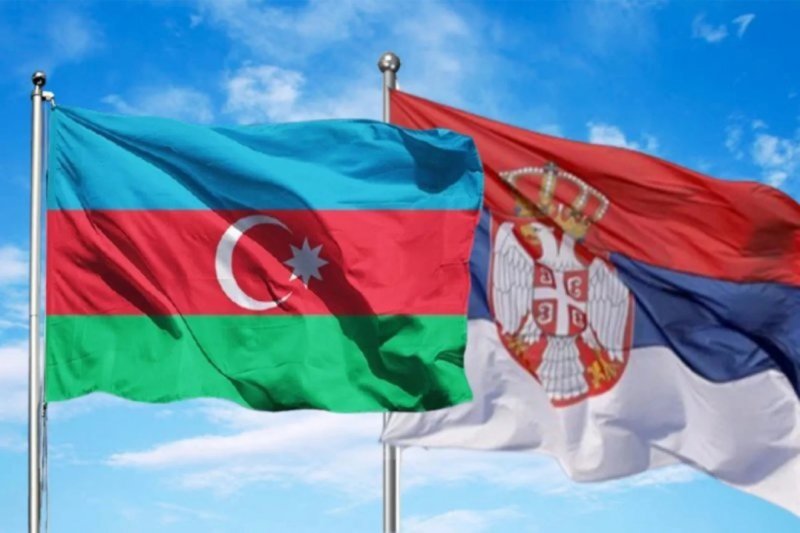
Relations between Serbia and Azerbaijan have strengthened steadily in recent years, evolving from traditional diplomatic ties into a strategic partnership. This progress has been driven by mutual political trust, cooperation on international platforms, and a growing number of joint projects. At a time of increasing geopolitical uncertainty both regionally and globally, the two countries have shown a flexible and pragmatic approach to foreign policy.
Political dialogue remains one of the central pillars of this relationship. Azerbaijan and Serbia consistently support key principles of international law, including sovereignty, territorial integrity, and noninterference in internal affairs. This shared stance enhances mutual understanding, particularly on sensitive regional matters, and helps anchor their ties at a strategic rather than purely tactical level.
RECOMMENDED STORIES
Economic cooperation, in turn, is giving the partnership increasingly practical substance. In the energy sector, Azerbaijan serves as a reliable partner for Serbia. The entry of Azerbaijani gas into the Balkan market is not only a commercial undertaking but also strategically important for diversifying Serbia’s energy security. At the same time, there is significant potential for cooperation in transport and logistics, infrastructure, construction, and agriculture.
Humanitarian and cultural ties also constitute an important component of bilateral relations. Cooperation in education, culture, and public diplomacy strengthens goodwill between the two societies and creates a sustainable social foundation for political dialogue. In this context, interparliamentary contacts and ties between business communities also play a notable role.
The current stage of relations is marked by strong political will at the leadership level. In particular, President Ilham Aliyev’s recent visit to Serbia can be seen as a concrete manifestation of this commitment. The meetings held and messages delivered during the visit demonstrated that Baku and Belgrade view their relations as long-term strategic cooperation. The visit will be remembered not only for reinforcing existing ties but also as an important political milestone marking the transition of Azerbaijan–Serbia partnership to a new phase.
In a comment to News.Az, Rusif Huseynov, Director of the Baku-based Topchubashov Center, said President Ilham Aliyev’s official visit to Serbia demonstrates that bilateral relations are deepening and that Baku’s strategic course toward the Balkans is being implemented consistently.
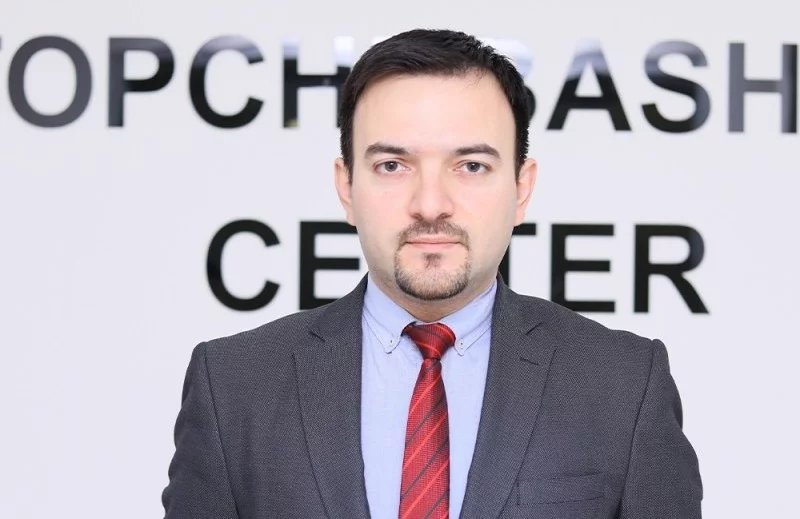
Source: Rusif Huseynov, Director of the Baku-based Topchubashov Center
“President Ilham Aliyev’s visit to Serbia clearly demonstrates that Azerbaijan–Serbia relations have entered a qualitatively new stage,” Huseynov emphasized.
According to him, the meeting between President Aliyev and Serbian President Aleksandar Vučić during the visit, as well as the documents signed by the delegations, highlight several key dimensions of bilateral cooperation.
“It would be incorrect to view this visit solely as a bilateral diplomatic engagement. It represents the next phase of Azerbaijan’s long-term and systematic strategic approach toward the Balkan region,” the expert noted.
Huseynov said that Azerbaijan’s interests in the Balkans are particularly notable in this context. “Although this factor is not always prominent in domestic public debate, Azerbaijan has for many years acted as an active geopolitical player in the Balkans and has consistently advanced its national interests in regional developments,” he said.
According to the expert, one of the main pillars of these interests is energy security. “The transportation of Azerbaijani gas to Europe via Balkan routes plays an important role in regional energy supply, and through this, Baku makes a strategic contribution to the energy security architecture of both the Balkans and Europe as a whole,” he added.
He also noted that Azerbaijan–Serbia relations have already acquired an institutional character. “These ties are not accidental; they are based on a cooperation model formed over many years that produces concrete political and economic results,” the expert said. According to him, the sixteenfold increase in trade and services turnover between the two countries in recent years is a tangible indicator of real progress.
Huseynov further emphasized that the active presence of Azerbaijani companies in the Serbian market, especially in construction and infrastructure, demonstrates the practical outcomes of cooperation. “This proves that the partnership is already built on concrete projects and economic interests,” he said.
In the expert’s view, the leader-to-leader factor also plays an important role in the development of relations. “The mutual trust and friendly relations formed between President Aliyev and President Vučić, as well as their similar views on issues such as sovereignty and multivector foreign policy, make a serious contribution to further deepening institutional cooperation,” Huseynov stressed.
“It is precisely this understanding at the leadership level that is one of the key factors ensuring the sustainable and stable development of Azerbaijan–Serbia relations along a strategic trajectory,” he concluded.


Similar news