Iranian music school reportedly destroyed in airstrike


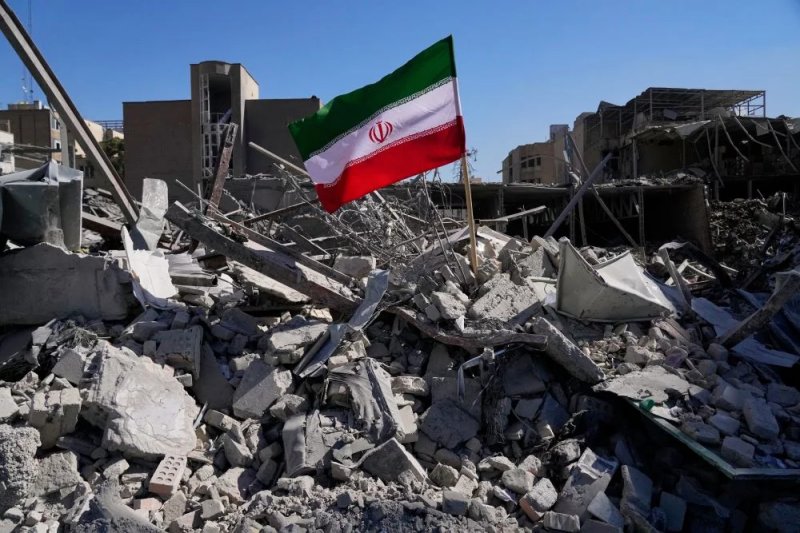
In the heart of Tehran, the halls of the Honiak Music Academy once resonated with the intricate melodies of classical Persian music. From the delicate plucking of the setar to the bright, rhythmic ring of the santur, the school served as a vibrant sanctuary for Iran’s musical heritage—until a devastating airstrike silenced its rooms forever
It was the pride and joy of Iranian musician Hamidreza Afarideh, who opened the school two years ago with his wife, Sheida Ebadatdoust. They had poured their hearts and money into creating a space that felt like a haven for their 250 students, who ranged in age from toddlers to the elderly News.Az reports, citing CNN.
Now, he says, it has all been “wiped out.”
An airstrike hit the building housing their music school, along with several other businesses including a maternity clinic, on March 23. The building was located on the east side of the Iranian capital, less than two kilometers (1.3 miles) from a military air base.
RECOMMENDED STORIES
There was nobody in the music center at the time – Afarideh and Ebadatdoust closed the school not long after the US and Israel launched their joint attack on Iran, to protect their students and staff from relentless bombardment.
But the destruction cuts deep for the couple, who have devoted their lives to sharing the joy of music. And it reflects the devastating impact of the war on civilians – the loss of normalcy, security, livelihoods and passions – that goes far beyond the stark numbers of a death toll that rises every day.
“All the property and assets that my spouse and I had built over 15 years of hard work were destroyed overnight — completely wiped out, with nothing left,” said Afarideh.
The first sign of trouble came when the music school’s alarm system started blaring just after dawn.
Afarideh and Ebadatdoust – who is also a musician – thought somebody could be trying to break in, and rushed to the location. As they neared, they realized it was something far worse. “We saw very heavy smoke and fog in the sky,” he said. “It was so dense that we couldn’t see ahead of us and couldn’t even properly drive toward the institute.”
They waited outside for many agonizing hours before Iranian authorities completed their search and rescue operations, and allowed them in. Their school was on the fourth floor of the building, and “with each floor we climbed, the level of destruction was so severe that the stairs were collapsing as we moved upward,” he said.
When they finally made it to their unit, they were met with ruins. The attack had blown out the windows of the school and collapsed its exterior wall; inside, everything they loved had been turned to ash and rubble.
“There were no musical instruments left,” he said. “None of the equipment we had — like TVs, audio systems, or any of the facilities a professional institute should have — remained. All the walls that had been built with professional acoustic soundproofing were completely destroyed.”
Photos and videos of the aftermath show some hints of what had been there before: the broken wooden body of a lute, the snapped neck of a guitar. But mostly, “the force of the drone explosion was so strong that it was as if none of these items had ever existed,” he said.
That day, Tehran was battered by airstrikes, like it had been for weeks since the joint US-Israeli war with Iran began. By evening, Israel’s military said “wide-scale” strikes in Tehran had targeted official and military infrastructure, including weapons manufacturing sites and security headquarters.
But that’s not all they hit, with another residential building struck in the city’s north – and a young child trapped inside until he was rescued hours later.
When contacted for comment, the Israel Defense Forces confirmed it had “carried out a targeted strike on a Quds Force intelligence headquarters near the specified location.”
It added that the IDF’s strikes follow international law, and that “it was assessed that the anticipated military advantage from the strike was significant and outweighed the expected collateral damage, including to nearby structures.”
“For many of them, this place was like a second home,” he said. “It gave them a strong sense of comfort and security. Because my wife and I worked there together, the environment had a family-like atmosphere, which made it very appealing to them.”
Now, he added, the students are distraught “because that kind of space no longer exists for them.”
The United States Central Command told CNN it had no information to provide on the matter.
Afarideh and Ebadatdoust are now grappling with how to move forward – how to rebuild their institute, where to find the funds, and how to support their staff and students in the midst of war.
The school had also employed about two dozen teachers and administrative staff, many of whom were young graduates in their 20s now without an income – at a time when their nation’s already struggling economy has been further pounded by war.
Because the building structure was so badly damaged, they will likely need to move the music school to a new location. But it’s not clear whether they can afford to start from scratch, especially with the cost of goods rising due to high inflation.
In total, he estimates that they lost close to $42,000 in damaged and destroyed property. In Iran, where the GDP per capita in 2024 hovered around $5,120 a year according to the World Bank, that’s a fortune.
They are now seeking assistance from other music associations in Iran, as well as the government’s Ministry of Culture.
However, relief could be a long time coming as the war stretches into its second month. The US and Iran continue engaging in indirect negotiations, but both sides are sending contradictory messages about the status of their talks. In the meantime, as leaders issue threats and lobby airstrikes at each other, residents on the ground suffer.
“Countries like Iran, with thousands of years of culture and art, have a strong identity tied to music,” Afarideh said. “When this identity is meant to be passed on through our students and us to future generations, it must be supported.”


Similar news