Nuclear power plant in Kazakhstan – pros and cons


By Tural Heybatov
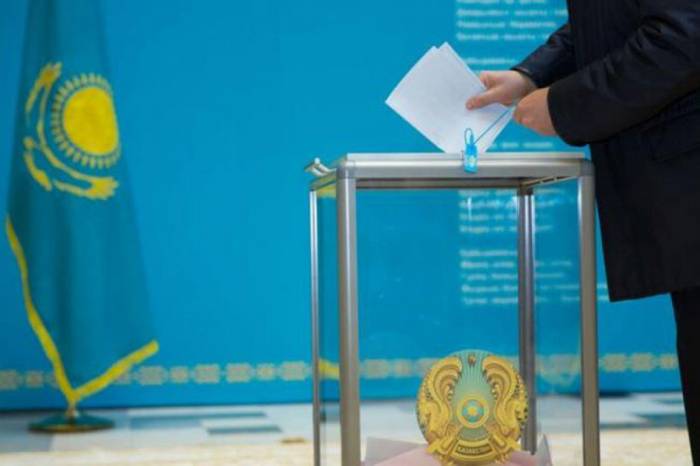
The topic of energy transition is one of the most complex, especially for countries with limited renewable energy resources. Central Asia is one of those regions. In striving for decarbonization, the countries of Central Asia risk facing serious challenges that they will have to solve on their own, without the assistance of green transition activists. This process is extremely costly, and each country must find its own way to implement it.In October , Kazakhstan will hold a referendum on the construction of the country’s first nuclear power plant. President Kassym-Jomart Tokayev announced in his traditional Address to the Nation that the referendum is scheduled for October 6. Tokayev explained the need for nuclear energy due to the global energy deficit and the country's demand for reliable and clean energy sources.
Discussions about the construction of a nuclear power plant in Kazakhstan began last year, not as rumors or insider information. The Ministry of Energy announced that three potential sites had been selected for the plant, and there were candidates for the project. These include China’s CNNC, South Korea’s KHNP, France’s EDF, and Russia’s Rosatom. If the referendum approves the construction of Kazakhstan's first nuclear power plant, the government plans to allocate $10-12 billion for the project, with most of the funds to be secured as loans.
However, such a significant decision cannot be made without the people's approval. Public and expert opinions are divided. Opponents of nuclear energy argue that a nuclear power plant poses a serious threat to the country. The construction of a plant near Lake Balkhash could negatively affect the ecology of this unique body of water, and in the event of an accident, the entire country could be at risk due to the wind patterns in the region.
Meanwhile, the idea of placing the plant near Lake Balkhash was considered back in Soviet times, and today this option has been approved by international organizations. In the fall of 2023, IAEA experts once again confirmed that there are no factors preventing the construction of a nuclear power plant near the lake. Proponents of the project argue that the probability of an accident at a modern nuclear power plant is less than one in 10 million years. In contrast, the risk at coal-fired plants is 80 times higher. Modern nuclear power plants have protective containment structures that prevent radiation leaks.
However, these arguments do not convince opponents of nuclear power. They recall the Fukushima disaster in Japan, where the aftermath of the 2011 accident is still being felt. In 2023, the Fukushima plant continued to experience problems, including radioactive water leaks and malfunctions in the spent fuel cooling system. Disasters at Three Mile Island in 1979 and Chernobyl in 1986 also remain vivid examples, which led some countries to abandon nuclear energy.
Despite the criticism, experts believe that Kazakhstan cannot do without a nuclear power plant. Recently, Prime Minister Olzhas Bektenov stated that the country needs a new primary energy generator. If the referendum supports the construction of a nuclear power plant, it will be a crucial step for the development of industry and ensuring the country’s energy needs.
In 2021, Kazakhstan faced a significant electricity deficit, which, according to the Ministry of Energy, could reach 5.5 billion kWh by 2029. However, in September 2024, something unexpected happened: the deficit was temporarily overcome. Electricity production exceeded consumption, raising questions about the need for a nuclear power plant.
Nonetheless, one day's data cannot be grounds for canceling the referendum. The Kazakh government remains determined and expects a positive outcome from the people. If approved, the nuclear power plant will be built by 2035 in the village of Ulken, on the shores of Lake Balkhash, with a capacity of 2.4 GW (two units of 1.2 GW each).
More than 50 countries worldwide currently use nuclear energy, and Kazakhstan may soon join them. However, the country should be prepared for potential delays and cost overruns, as has often been the case in the history of nuclear energy projects. Examples show that the launch of new reactors can take decades.
Let’s hope Kazakhstan avoids such problems.


Similar news