Ukrainian veterans to train German military in modern drone warfare


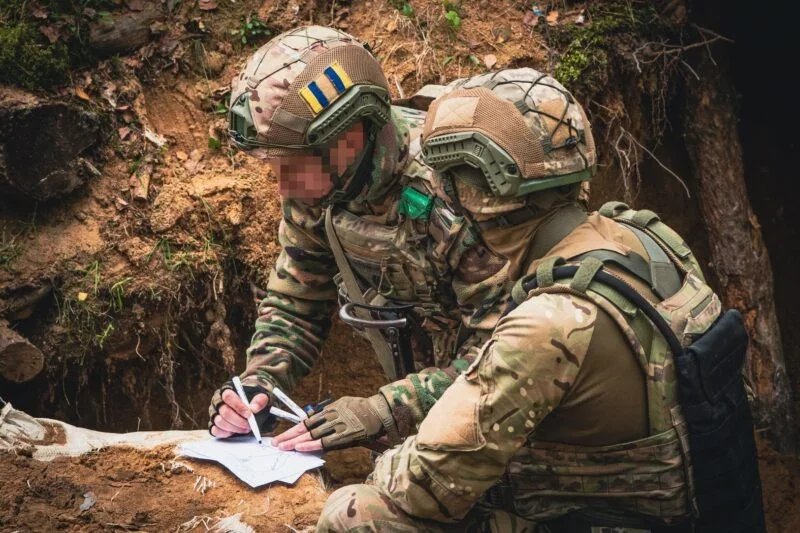
For the first time, Ukrainian military instructors with direct frontline combat experience have arrived in Germany to train Bundeswehr units — a striking reversal of the training relationship that has defined Western military assistance to Ukraine since 2022, according to Militarniy.
The deployment, confirmed by German Army Inspector Lieutenant General Christian Freuding in an interview with Welt am Sonntag on April 17, 2026, began before Easter at several German Army schools, News.Az reports, citing Defence-Blog.
Freuding made clear this is not a symbolic gesture. He specifically recruited fighters with hands-on battlefield experience, not staff officers, to run the program.
RECOMMENDED STORIES
Ukrainian instructors are currently working at the Armored Corps School, the Engineer School, and the Unmanned Systems Training Center. Within days of Freuding’s interview, additional instructor groups were scheduled to arrive at the Artillery School. The curriculum centers on two core competencies that Ukraine has developed under fire: protection against drones and the effective offensive use of unmanned systems in combined arms operations. Germany intends to embed those skills across its armor, mechanized infantry, and artillery formations — the core of any conventional warfighting force.The agreement to send Ukrainian instructors to German training facilities was reached in February 2026. Freuding framed the program’s logic in direct terms, emphasizing that he wanted people who had actually fought, not officers who had managed the war from command posts. “The Ukrainian military is currently the only one in the world with frontline experience against Russia,” he said. That distinction matters enormously. Germany and its NATO allies have spent years training their forces against theoretical peer-adversary threats. Ukraine has spent years fighting one.
What Ukrainian instructors bring to German military schools cannot be replicated in a classroom or synthesized from intelligence reports. They have operated under constant electronic warfare jamming that degrades GPS and communications. They have learned to navigate battlefields blanketed with first-person-view attack drones capable of killing individual soldiers, vehicles, and crew-served weapons within minutes of exposure. They have adapted artillery tactics, armor employment, and infantry movement to an environment where any position held for more than a few hours becomes a target. They have seen which systems survive and which fail, which tactics work and which get people killed. That body of knowledge, accumulated at enormous human cost, is what Germany is now paying to access.
The focus on drone defense and drone employment is particularly significant for the Bundeswehr. Unmanned aerial systems have fundamentally altered how land warfare is conducted — not as a supplementary tool but as a central feature of the battlefield that shapes every other tactical decision. Ukrainian forces have developed layered systems for detecting, jamming, and destroying incoming drones while simultaneously deploying their own for reconnaissance, targeting, and direct attack. Integrating that understanding into Bundeswehr tank, mechanized, and artillery training means German units will practice operating under the same drone-saturated conditions they would face if the threat Freuding has publicly described ever materialized.
That threat assessment is explicit. Freuding has stated that Germany regards 2029 as a potential date by which Russia could be ready for an attack on NATO territory. “It’s almost the day after tomorrow. We don’t have time — the enemy won’t wait until we announce our readiness,” he said in March 2026 when the program was first publicly discussed. The Ukrainian instructor deployment is one concrete measure taken against that timeline — an accelerated transfer of battlefield knowledge designed to compress the Bundeswehr’s learning curve before it matters.
Germany’s broader military expansion provides the context for this specific initiative. Defense Minister Boris Pistorius has set a target of 3.5 percent of GDP in defense spending by 2029, tied to an ambition to field Europe’s most capable conventional army by that year. The Bundeswehr has been restructuring its forces to reflect modern battlefield realities, with a particular emphasis on unmanned systems integration across ground and air operations. Ukrainian instructors training German tankers, engineers, and artillerists are one operational piece of that restructuring — the human knowledge component that no procurement contract can deliver.
For years, Western nations — including Germany — trained Ukrainian soldiers in their doctrines, on their equipment, and toward their standards. That relationship produced capable Ukrainian formations but also exposed the limits of what Western peacetime training could prepare soldiers for. The Ukrainians then went and fought a war that has produced tactical and operational lessons no NATO country has access to from its own experience. Now Germany is asking those same soldiers to come and teach. It is a measure both of Ukraine’s sacrifice and of Europe’s pragmatism that the answer was yes.
By Leyla Şirinova


Similar news