Azerbaijan’s growing economic presence in Israel, combined with intensified military-technical cooperation and expanding people-to-people exchanges, underscored the evolution of bilateral ties toward a de facto strategic alliance. At the same time, the partnership gained broader geopolitical significance, strengthening Azerbaijan’s international standing, enhancing Israel’s regional connectivity, and demonstrating the durability and forward-looking nature of their relations.
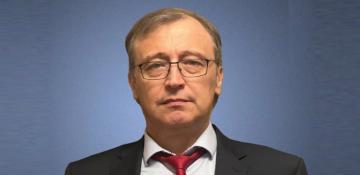
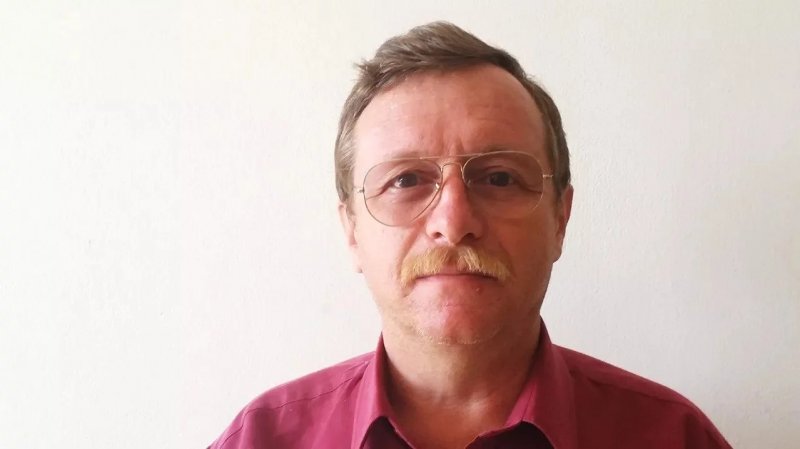
In this context, News.Az spoke with Alexander Gur-Arie, an economic and political commentator for ITON-TV in Israel.
– How successful, in your view, were Azerbaijani–Israeli relations in 2025?

Source: APA
– Azerbaijani–Israeli relations have been characterized by stability for many decades, and 2025 was, of course, no exception. So, if I answer your question about how successful our relations were, I can say that they were extremely successful.
One could even say that these relations reached the level of a strategic alliance. First of all, this concerns significant investments in the Israeli economy, particularly in the energy sector. We know that Azerbaijan increased its direct investments in Israel’s economy.
In the first half of the year, they amounted to $542.5 million. The Azerbaijani company SOCAR acquired a 10 percent stake in the large Israeli gas field Tamar. This, incidentally, was the first time Israel allowed a foreign company that was neither a founding partner nor involved in the exploration of the field to acquire such a substantial ownership stake.
In addition, SOCAR and the Israeli company Union Energy signed a memorandum on joint gas exploration in Israel’s exclusive economic zone. This is also a very significant achievement and speaks to an extremely high level of trust, both political and economic, since these two concepts are closely interconnected. Traditionally, there has also been strong cooperation in the military-technical sphere.
For example, on November 8, 2025, during the military parade in Baku, the latest Israeli weapons systems were demonstrated, which effectively confirmed Israel’s status as a key technology supplier to the Azerbaijani Armed Forces.
In May 2025, Azerbaijan’s Minister of Defense Zakir Hasanov visited Israel, where a wide range of military-educational and technical ties, among other issues, were discussed. In the same year, the fourth meeting of the Joint Economic Commission took place in Jerusalem, during which cooperation in various fields was discussed, including cybersecurity, innovation, and water desalination. Israel is currently one of the world leaders in the production of equipment for desalination plants and in desalination technologies in general.
Moreover, the trilateral cooperation format between Israel, Azerbaijan, and the United States is expanding. It is no secret that Israel served as the key that opened the doors of the White House for Azerbaijan.
As is well known, relations between the United States and Azerbaijan in recent years were not particularly smooth. In 2025, however, these relations improved noticeably, and Israel can credit itself with the resumption of closer and more friendly relations between Azerbaijan and the United States.
In 2025, Israel appointed a new ambassador, meaning there was a change of ambassador. Ronen Krausz presented his credentials to Ilham Aliyev. All of this took place in 2025.
And, of course, one cannot fail to note the successes in the field of tourism. In 2025, more than 60,000 Israeli tourists visited Azerbaijan. Regular flights on the Baku–Tel Aviv route increased to 14 per week. This is unique, especially at a time when many international airlines, primarily European ones, were canceling or reducing the number of flights to Israel, while Azerbaijan Airlines, on the contrary, increased the number of flights. This is very important for Israel. Baku has become a kind of aviation hub. Many Israelis use flights to Baku for connections.
Incidentally, tourists traveling to Israel, particularly those from Russia, often fly via Azerbaijan since there are convenient connections, comfortable aircraft, good service, and so on.
– What are your forecasts regarding the domestic political situation in Iran?

Source: arabnews
– In Israel, of course, developments in Iran are being followed very closely. This is a very important issue for us. By “we,” I mean both political commentators and representatives of the security forces and intelligence services. Everyone is watching very carefully what is happening in Iran. This is a popular uprising which, with a certain degree of caution, can probably already be called a revolution, and which essentially arose on the basis of economic difficulties.
The first thing that catches the eye is that the unrest began in the market sector. Markets in Iran are a very important element, especially in Tehran – they play a crucial role. Quite quickly, these economic demands evolved into political ones.
Slogans such as “Death to the dictator!” and “Down with Khamenei!” began to be heard more and more frequently. Now we see that in some even small cities, power has been completely seized by the rebels. The issue is extremely complex.
Iran has a very strong system of repression. There is the regular army, and separately there is the Islamic Revolutionary Guard Corps. Moreover, in terms of power and capabilities, the IRGC surpasses the army in many respects.
This is a unique situation. It is probably difficult to find analogies in world practice. Therefore, if the army could, purely hypothetically, side with the people – something that is being discussed – the IRGC represents the top of the elite. They are financed differently from the army and motivated differently as well. They have a very strong motivation to defend the regime. That is why the situation is extremely difficult.
Persistent rumors are circulating that both the CIA and Israel’s Mossad are actively involved in organizing these protests. Of course, I have no proof of this and cannot state it with 100 percent certainty. I do not have materials to confirm this. However, everything indicates that these protests differ from those that took place in Iran in the recent past, as a certain degree of organization can be observed. At first glance, everything seemed to start spontaneously, but the way events are unfolding now suggests a level of coordination. And what is most important, and in my view most surprising, is that everywhere one hears the slogan “Long live the Shah!”
The point is that it was always believed – and political commentators and Iran specialists, including Israeli Iranists, also asserted this – that the Shah did not enjoy great popularity in Iran, that this was a kind of mythical figure. Of course, we are not talking about the Shah himself, but about the Crown Prince. Reza Pahlavi is not officially a Shah; he is the Crown Prince. Nevertheless, it was said that monarchy in general was no longer relevant for Iran and that this Crown Prince did not enjoy support. At the same time, what we are seeing and hearing now completely refutes this.
To some extent, one can understand that the image of a monarch can serve as a unifying force that brings together various religious and ethnic groups in Iran. And perhaps this is precisely the advantage and distinctive feature of this uprising.
Incidentally, the Crown Prince has stated that he does not intend to restore the monarchy, that he is prepared initially to lead a transitional government and then hold free elections so that Iranian citizens themselves can decide whom they want to see at the head of the state. In doing so, he is modestly hinting that he would not mind becoming president, which is quite understandable.
– How likely is an improvement in relations between Türkiye and Israel? Can the factor of U.S. President Donald Trump and Azerbaijani President Ilham Aliyev contribute to softening the positions of Israel and Türkiye toward each other?
Source: AzerTAG
– Relations between Israel and Türkiye are extremely complicated. In the past, we observed very close cooperation – economic, political, and military, but all of this was lost. And it was not lost at Israel’s initiative. Today, relations between Israel and Türkiye are very difficult. There is a conflict of interests between Israel and Türkiye in Syria and Gaza. Türkiye is strongly seeking to increase his level of involvement in all Middle Eastern issues. Israel is categorically opposed to the participation of Turkish military personnel in a peacekeeping mission in Gaza; for us, this is a red line.
Is it possible to improve relations between Türkiye and Israel? It is possible, but the ball is on Türkiye’s side.
Trump very much wants, so to speak, to reconcile Israel and Türkiye. It should be noted that Azerbaijani President Ilham Aliyev once did a great deal to bring positions closer together. Thanks to him, negotiations took place in Baku, and there was a temporary improvement, but then Türkiye once again changed his rhetoric toward Israel.
Therefore, I am quite pessimistic about the prospects for normalizing relations with Türkiye, precisely because of what we see and hear in Türkiye. The chances that Türkiye will change his rhetoric and want to normalize relations with Israel, in my view, are very low.
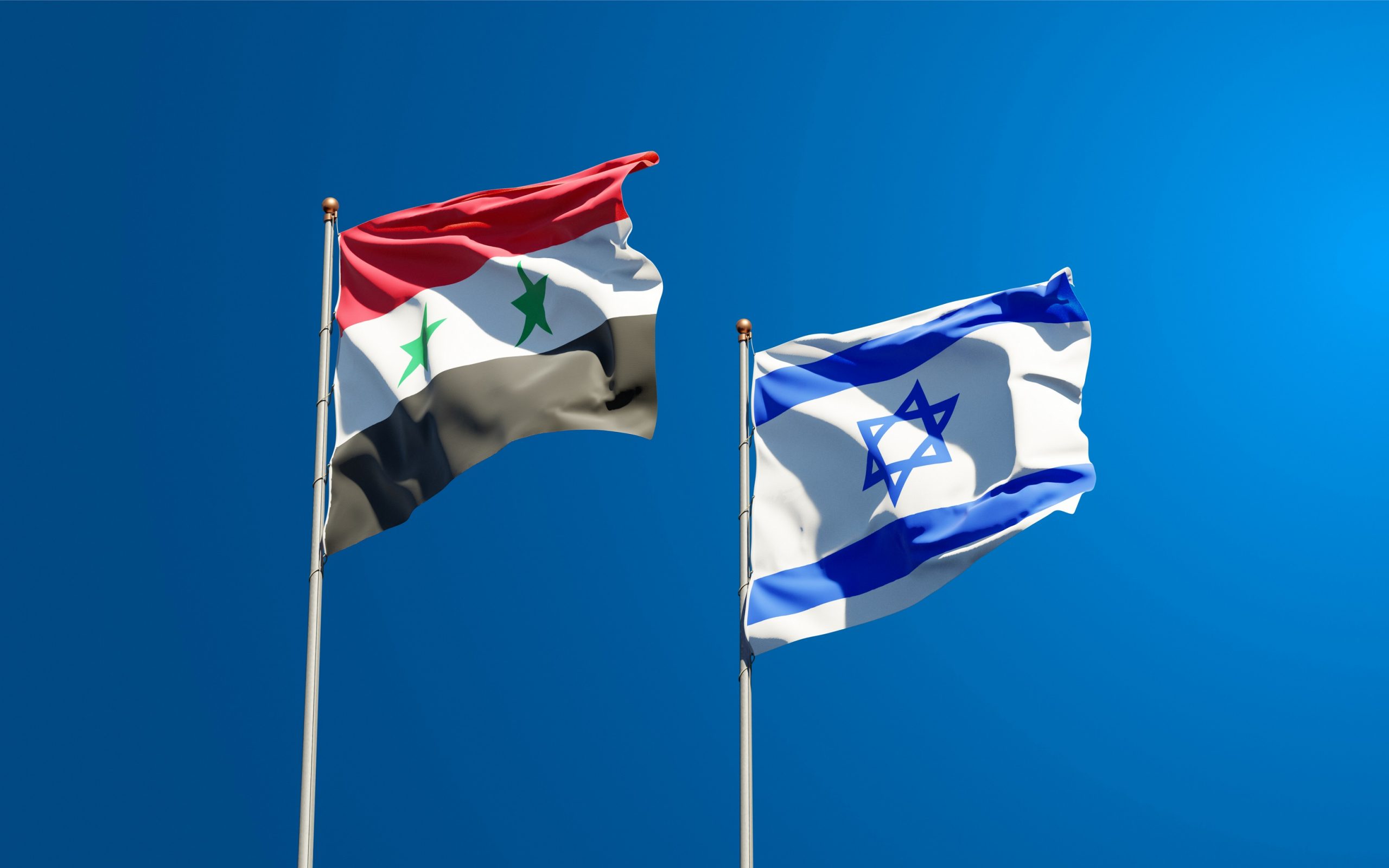
– How possible is the normalization of relations between Israel and Syria in 2026?
Source: Reuters
– Israel is very interested in stability in Syria. We want jihadists not to raise their heads there, for Syria not to pose a threat to Israel’s security, and for massacres of national minorities not to take place in Syria. What we witnessed – and I will repeat this terrible word – was a massacre, the massacre of the Druze. And it did happen. Israel intervened on behalf of the Druze and, in fact, defended them.
In this context, just yesterday another round of talks between the Israeli and Syrian delegations concluded. Very optimistic assessments are being voiced regarding these talks. That is, they will continue.
We very much hope that normal relations with Syria will be established. By all indications, the President of Syria, al-Sharaa – previously known as al-Jolani – is also interested in this. He understands that without normal and close relations with Israel, it will be very difficult for him to remain in power. Armed groups are still operating in Syria, which often do not fully obey the central authorities.
His task now is not to enter into conflicts with Israel or anyone else, but to try to put his domestic affairs in order and to minimize as much as possible the damage that these groups can cause, attempting, so to speak, to integrate them into his armed forces. If you cannot change something, you have to lead it – that is exactly what he is now planning to do. Therefore, I hope that relations between Israel and Syria will be calm and peaceful. This is entirely possible. Israel is ready for this and, to some extent, is striving for it.
By Asif Aydinli