LONG READ | The third anniversary of the conflict in Ukraine: Outcomes, lessons, and prospects


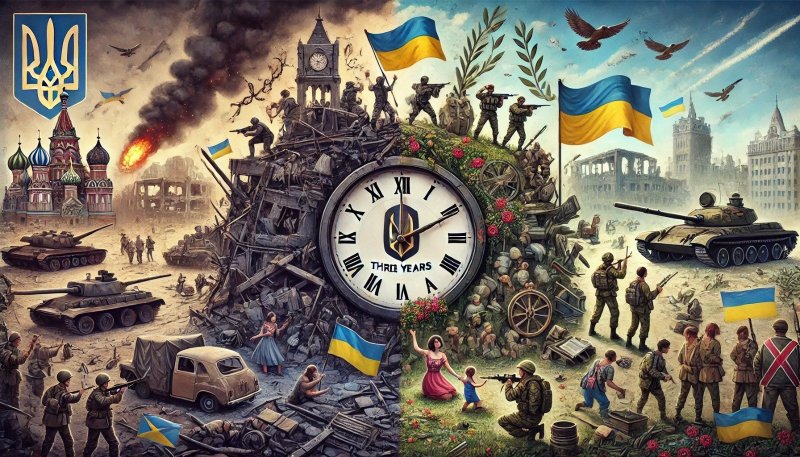
February 24, 2025, marks three years since Russia launched its full-scale invasion of Ukraine, a conflict that has profoundly altered the global geopolitical landscape. Beyond the devastating impact on Ukraine itself, the war has had far-reaching consequences for international security, diplomacy, and economic stability. Millions have been displaced, cities reduced to rubble, and the fundamental principles of sovereignty and territorial integrity tested in ways not seen in Europe since World War II.
The war has inflicted immense suffering on Ukraine. Entire cities have been devastated, critical infrastructure severely damaged, and countless lives lost. Ukrainian civilians have borne the brunt of the hostilities, with thousands killed or injured as a result of missile strikes, urban combat, and widespread destruction. Mariupol suffered some of the most intense fighting, with up to 90 percent of its buildings damaged or destroyed. Kharkiv, Ukraine’s second-largest city, saw widespread destruction, with nearly half of its residential buildings affected. Kyiv, though largely resilient, has endured repeated missile attacks, damaging key infrastructure, including schools, hospitals, and power facilities. Nationwide, critical infrastructure such as railways, ports, energy grids, and medical facilities has been targeted, disrupting essential services and further straining the economy.
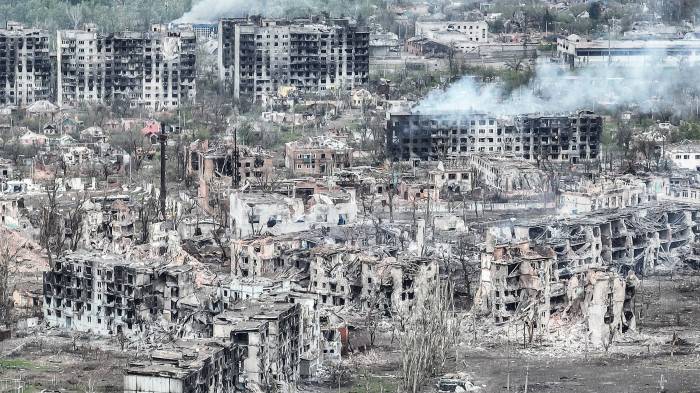 The city of Bakhmut is in ruins as a result of the Ukraine war. Photo/Roman Playshko, Shutterstock
The humanitarian impact of the war has been devastating. Over 300,000 civilians have been killed or wounded, with the true toll likely higher due to difficulties in obtaining accurate data from frontline regions. Ukraine’s healthcare system is under severe strain, with more than 100 hospitals damaged or destroyed. The war has triggered one of the largest refugee crises in modern history, with millions forced to flee, seeking safety within Ukraine or abroad. Neighboring countries, particularly Poland, Romania, and Germany, have absorbed large numbers of Ukrainian refugees, creating significant humanitarian challenges.
Ukraine’s resilience has been bolstered by unprecedented international support. Western nations, including the United States, European Union members, and the United Kingdom, have provided significant military, financial, and humanitarian assistance. Over the past three years, Ukraine has received advanced weaponry, including Patriot missile systems, HIMARS, Javelin anti-tank missiles, and Western battle tanks such as the M1 Abrams and Challenger 2. These weapons have played a crucial role in Ukraine’s counteroffensives, particularly in the Kherson and Zaporizhzhia regions, where Ukrainian forces have regained substantial territory. Humanitarian assistance from the United Nations and international NGOs has provided food, medical supplies, and temporary housing to millions displaced by the conflict. Poland alone has taken in over 8.5 million Ukrainian refugees, making it the largest refugee crisis in Europe since World War II.
The full-scale invasion in 2022 did not happen in isolation. It was preceded by years of rising tensions between Russia and Ukraine, rooted in a complex history of political struggles, territorial disputes, and differing national identities. In March 2021, Russia began a large-scale military buildup near Ukraine’s borders, initially under the guise of military exercises. By December 2021, satellite imagery confirmed the deployment of over 100,000 Russian troops, raising global concerns about a possible escalation. On February 24, 2022, Russian forces launched a multi-pronged offensive from the north, east, and south, targeting Kyiv, Kharkiv, and the Black Sea coast.
Since the initial invasion, the war has seen significant developments that have reshaped both battlefield dynamics and international perceptions. In the summer of 2023, Ukraine launched counteroffensives aimed at reclaiming occupied territories in Donbas, Kherson, and Zaporizhzhia. While progress has been hard-fought, Ukrainian forces have made gains, retaking key settlements and disrupting Russian supply lines. The conflict has also exposed internal challenges within Russia. In September 2022, the Russian government announced a partial mobilization, prompting protests and an exodus of young men fleeing conscription. In June 2023, the Wagner Group mutiny, led by Yevgeny Prigozhin, briefly challenged the Russian military leadership, exposing cracks within Russia’s defense establishment.
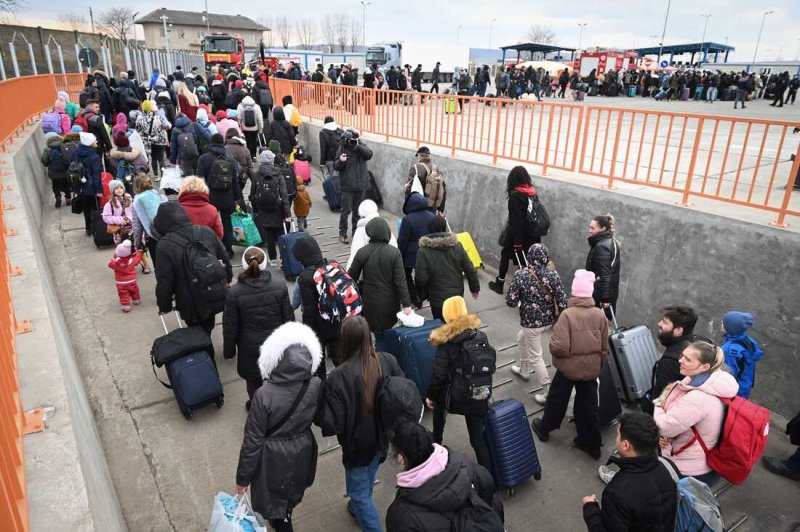 People coming from Ukraine descend from a ferry boat to enter Romania at the Isaccea-Orlivka border crossing at the Danube river. Daniel Mihailescu/AFP via Getty Images
The war has displaced over 16 million Ukrainians, with 8 million seeking refuge abroad. Countries across Europe have mobilized resources to assist the displaced, but the strain on infrastructure, housing, and social services remains immense. Many Ukrainian cities that were not directly on the frontline have also suffered economic setbacks due to disruptions in supply chains and the destruction of key industries.
As of 2024, the conflict remains unresolved. While Ukraine has regained some territories, Russia still controls key regions in Donbas, Zaporizhzhia, and Kherson. Diplomatic efforts to end the war have stalled, and both sides continue to suffer heavy losses. The war has fundamentally altered global security, reinforcing NATO’s role, reshaping energy markets, and redefining geopolitical alliances. Its long-term consequences on Ukraine, Russia, and the world will be felt for decades to come.
To summarize the three years of war, News.Az spoke with experts from Ukraine, Russia, Israel, and the United States. Analysts shared their assessments of the military, political, and economic consequences of the conflict, as well as possible scenarios for its future development.
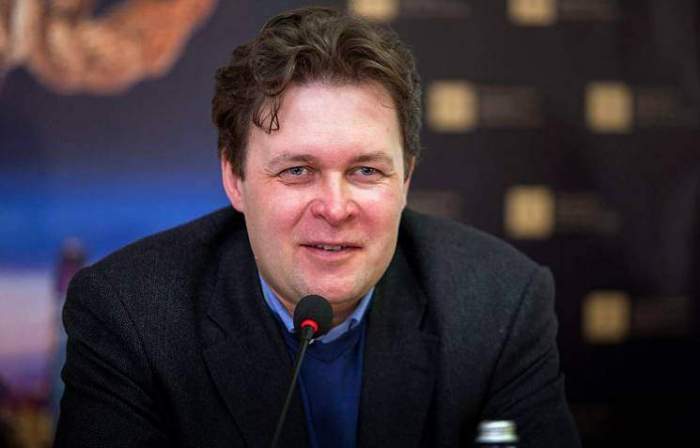
In an interview with News.Az, Ukrainian political expert Yevhen Mahda, reflecting on the third anniversary of Russia’s full-scale invasion of Ukraine, emphasized that the war did not begin in 2022 but in 2014. "The annexation of Crimea was simply a different format, a form of hybrid warfare," he explained. "In reality, the war has been ongoing for 11 years. It is probably the longest war against Russia, at least in modern European history," he added.
Mahda noted that three years ago, Russia claimed it would "take Kyiv in three days," yet today, it is evident that such an outcome was never feasible. "Now we see that this is impossible. That is why Russia is applying different forms of pressure, including influencing Donald Trump, in an attempt to put the war on pause as quickly as possible," he said. However, he warned that any pause in hostilities would not equate to stabilization. "Rather, it would signify Russia’s preparation for new actions—possibly targeting a European Union or NATO state or attempting to finish off Ukraine. This is absolutely clear," he stated.
Discussing the current situation on the battlefield, Mahda underscored Ukraine’s resilience. "Ukraine has withstood, and that is perhaps the most significant outcome of 2024 and the preceding years," he remarked. He also pointed to a crucial statistic: "Today, more than a million people are serving in Ukraine’s defense forces. This is the largest number in our history fighting for Ukraine. Never before have so many people defended the country’s independence." He contrasted this with previous conflicts, noting that while millions of Ukrainians served in the Russian imperial army during World War I and later in the Soviet army during World War II, "never before has such a number of people fought for an independent Ukraine."
Mahda framed the war as "the final farewell to the Soviet Union," describing it as a conflict between the two largest former Soviet republics. He asserted that regardless of how the war ends, even if there is a temporary pause, Russia will see no "triumphal moments." "We can already see this in recent weeks—the war has triggered tectonic shifts in global politics, a repositioning of the United States, significant internal changes within the country, and, of course, it has acted as a catalyst for transformation in Europe," he said.
While acknowledging the hardships of living under wartime conditions, Magda expressed confidence in Ukraine’s future. "Ukraine is recovering, and Ukraine will prevail—I am certain of that," he affirmed.
He also emphasized the importance of demonstrating Ukraine’s resilience. "Ukraine has proven that its statehood is not artificial, not something invented by London or the Austrian General Staff," he stated. "Meanwhile, Russia has exposed many of its own myths. For instance, Ukrainian troops have been operating in the Kursk region for six months now. This demonstrates that there is no so-called ‘red line’ the West cannot cross in its relations with Russia," he argued. "And this is especially relevant given what Donald Trump is doing today," Mahda concluded.
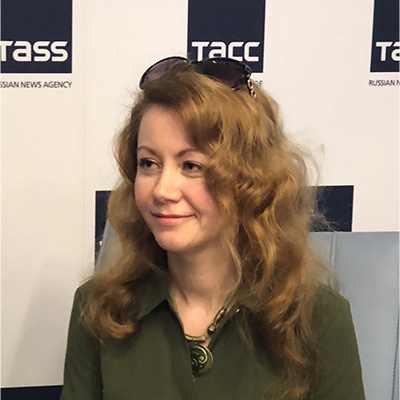
In an interview with News.Az, Russian political expert Natalia Eremina, reflecting on the third anniversary of the Russian-Ukrainian war, stated that the events unfolding in Ukraine are a continuation of historical processes in the region.
"What we are witnessing in the context of the Ukrainian crisis is, in many ways, a repetition of historical patterns in this territory. When the Ukrainian Soviet Socialist Republic was formed, it was based on territories acquired as a result of World War II, as well as lands historically inhabited by Russian people," she said.
Eremina noted that despite various policies pursued during the Khrushchev era, Ukraine never fully integrated into a unified Soviet space.
"Attempts to consolidate these territories within Ukraine with political support were ultimately unsuccessful. The question of Ukraine's federalization became particularly relevant in 1991, yet it was never implemented," she explained.
Discussing developments following the collapse of the Soviet Union, she argued that Ukraine has since evolved into what she described as a corrupt state. "Since 1991, Ukraine has become a country where fundamental democratic principles are not upheld and where internal agreements among political forces have proven elusive," she said. "Many issues were resolved through financial channels, including economic interactions with the Russian Federation, which contributed to the accumulation of wealth among a select group of individuals," she added.
Eremina also pointed to long-standing economic and political issues surrounding Ukraine's eastern territories, particularly Donbas.
"For years, Ukrainian leadership treated the region as an asset to be exploited and traded. Now, we see a recurrence of this dynamic, only this time with direct military support from the United States," she asserted.
Addressing the situation in Donbas, she referenced events from 2014, arguing that the Ukrainian government's military operations at the time exacerbated tensions.
"We must not forget that in 2014, the Ukrainian authorities launched an operation against the people of Donbas, leading to civilian casualties and widespread suffering among innocent people," she said. "This necessitated Russia’s active involvement in the negotiation process. It was clear from the start that the escalation would continue," she added.
According to Eremina, the broader conflict in Ukraine is deeply intertwined with Western geopolitical strategies.
"These events did not arise spontaneously; they were shaped by long-term strategic interests. The roots of this crisis can be traced back to the collapse of the Soviet Union in 1991, and perhaps even earlier, to the late 1990s," she claimed. "Western powers have consistently viewed countries in this region as instruments of containment against Russia, rather than as equal partners," she emphasized.
She also argued that Western nations and their allies have failed to present a viable alternative strategy for resolving the conflict. "The West appears committed to prolonging the confrontation, seemingly in the hope that internal challenges within Russia will lead to a shift in dynamics. However, this strategy has not succeeded," she said.
Eremina concluded by asserting that Russia remains on course to achieve its objectives. "By 2025, as I understand it, the liberation of Donbas will be completed, and Russia’s strategic plans will have been implemented," she stated. "Meanwhile, the West will continue to deny its role in the conflict and refuse to acknowledge the extent of its involvement," she concluded.
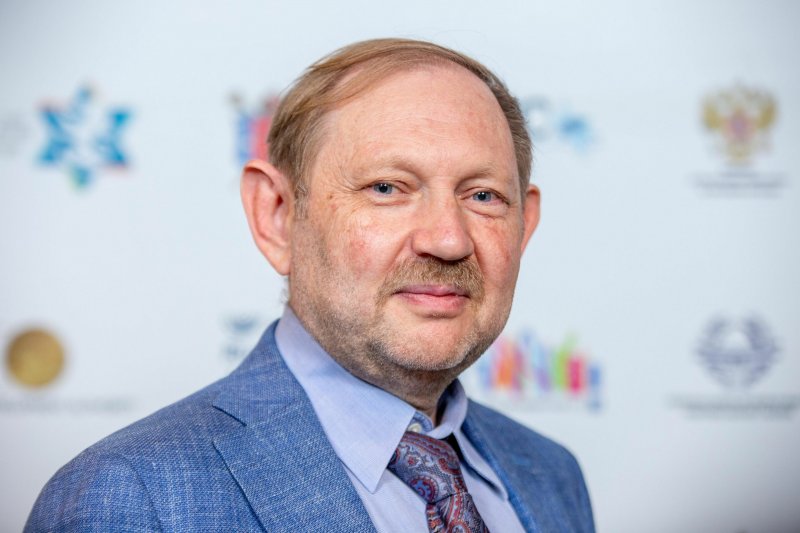
In turn, political expert Zeev Hanin from Jerusalem identified two key factors that could determine the outcome of the three-year military confrontation that began with Russia’s full-scale invasion of Ukraine in February 2022.
"The first is clear: Russia is unable to fully capture Ukraine by military means. At the same time, it is evident that Ukraine is not in a position to restore its territorial integrity within its 1991 borders through military action alone. This was understood from the outset, and the situation remains unchanged," Hanin stated.
He pointed to a second crucial factor that has been evident from the beginning: "If the war becomes prolonged, a war of attrition will clearly work in Russia’s favor, not Ukraine’s. This is quite obvious."
According to Hanin, the response of the Western world, which provided Ukraine with security assurances under the Budapest Memorandum, has proven largely ineffective. "Yes, Russia was also a signatory, but as we have seen, these guarantees have not been upheld. Over the past three years, Western powers have not provided Ukraine with significant assurances of victory.
The approach has been: 'We won’t let you lose, but we won’t let you win either.' That is the most Ukraine can expect."
Hanin was also critical of Ukrainian rhetoric about being the last line of defense for Western civilization. "These statements are empty words in the realm of realpolitik. In military affairs, abstract declarations do not change the balance of power. Napoleon once said, ‘Big problems are solved with big battalions.’ This is an important reality to consider," he explained.
He further emphasized that the West is unwilling to address Ukraine’s challenges at the expense of its own strategic interests. "This has been evident in the Biden administration’s policies over the past two and a half years. The West has been willing to provide only the minimum level of support necessary to stabilize the situation, rather than securing Ukraine’s victory. By the end of 2023, the frontlines had stabilized, and there have been no significant changes since," Hanin noted.
He pointed out that many, including in Ukraine, have come to acknowledge that the situation has reached a deadlock. "In negotiations, the issue is no longer about restoring Ukraine’s borders to those of 1991, much less to 2013. That is now clear," he said.
Regarding Russia’s position, Hanin noted that it remains uncertain whether Moscow has achieved more than it initially anticipated. "At this stage, it is unclear whether Russia has gained more than it expected. Even the fact that Russia is discussing the potential use of frozen assets in Western banks for Ukraine’s reconstruction suggests the possibility of a long-term truce, though not an end to the war. The territories occupied by Russia, including those it officially annexed, remain unrecognized by the international community. Only time will tell how this unfolds," he said.
Hanin believes that ultimately, the U.S. will play the decisive role in shaping the outcome. "Trump, over the next four years, appears determined to pursue his main foreign policy doctrine, which prioritizes China as the United States' primary economic and geopolitical rival. He believes the U.S. should end two unnecessary wars—one in the Middle East and one in Eastern Europe—and shift the responsibility for security in these regions to European nations," he explained.
According to Hanin, Trump seeks to negotiate with Moscow, establish clear red lines, and transfer security responsibilities in Eastern Europe to Europe itself. "He is pressuring European countries to increase defense spending, create a more effective collective security system beyond NATO, and take full responsibility for Ukraine as a European country. In many ways, this makes sense—after all, the geographic center of Europe is located in Ukraine," he said.
Despite the ongoing challenges, Hanin believes Ukraine has solidified its place in global politics. "Ukraine has, first and foremost, preserved its sovereignty. Secondly, it has become an important geopolitical factor, regardless of how events unfold in the future. At the same time, Russia remains a key player in international decision-making, and all those involved in the Eastern European crisis must take this into account," he concluded.
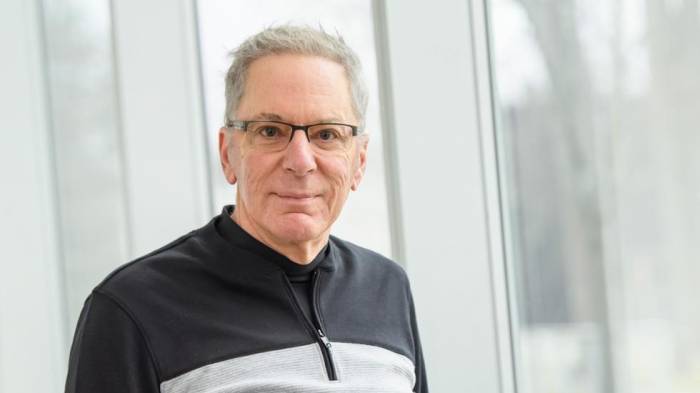
Alan Cafruny in interview with News.Az, a widely regarded scholar of international relations and international political economy, argues that Russia’s invasion of Ukraine three years ago—initially not a "full scale" assault—was widely anticipated in both Russia and the West to result in the conquest of Kyiv. Cafruny notes, “Vladimir Putin and Volodymyr Zelensky immediately commenced negotiations under the mediation of Türkiye.” However, Ukraine’s “stiff resistance against the relatively modest invasion force upended these expectations.” As Russia expanded its invasion force to “full scale,” Cafruny points out, “the United States urged Kiev to resist with the promise of NATO financial and military support for 'as long as it takes.'”
Three years later, Cafruny observes, the situation has become increasingly dire for Ukraine. “Following its unsuccessful counteroffensive in 2023, the war has become one of attrition,” he writes. He explains that sanctions have been largely ineffective, stating, “Russia’s larger population is crucial in this war, enabling a slow but steady advance.” Amidst the mounting casualties, Cafruny highlights that Ukraine’s war effort is suffering from a lack of reinforcements. “Avoidance of conscription and exit among young men is rampant,” he says, adding that “Zelensky’s own situation is increasingly precarious.” Cafruny also notes the growing frustration within NATO countries, observing, “In many NATO countries, there is widespread support for ending the war. This is the case in Germany, where AfD is expected to take 20% of the vote in elections.”
As the geopolitical situation shifts, Cafruny remarks on Donald Trump's transformation of the environment. “Trump has completely transformed the geopolitical environment,” Cafruny says. “He calls for U.S.-Russia rapprochement, negotiations on Russia’s terms, denial of future military and financial aid to Ukraine, and reportedly threatens to cut Ukraine off from the Starlink system enabling defense against drone attacks.” Cafruny also notes that “Negotiations over access to Ukraine’s vast critical minerals are taking place as the price of American future support.”
Despite the continued rhetoric from European leaders, including Germany’s likely new Chancellor Friedrich Merz, Cafruny argues, “A peaceful settlement is the best solution for Ukraine.” He asserts that “Russia’s terms are largely similar to the tentative agreement by Zelensky and Putin shortly after the invasion, until Washington encouraged Zelensky to fight on.” Cafruny contends that such an agreement—focused on Ukrainian neutrality, territorial concessions, and maintaining Ukrainian sovereignty—“would not, in any sense, resemble Munich 1938.” He continues, “Even if it were not itself gravely weakened by the war, there is no evidence that Russia seeks further territorial gains, despite the repeated Western/NATO narrative.” Cafruny concludes, “In this context, the EU can maintain its autonomy, global stature, and security through facilitating an agreement and supporting Ukraine’s future economic recovery, rather than urging further futile Ukrainian resistance.”
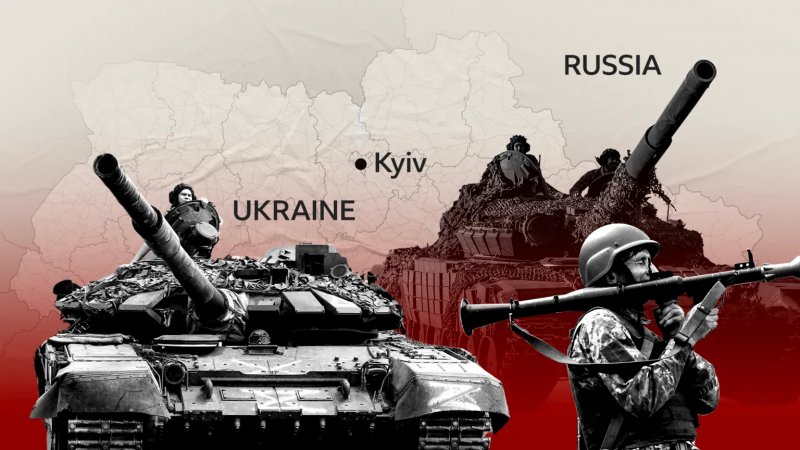 Photo: BBC
In an interview with News.Az, Alan Cafruny, a widely regarded scholar of international relations and international political economy, reflects on the three-year anniversary of Russia’s invasion of Ukraine.
He argues that while the invasion was not initially a "full-scale" assault, both Russia and the West anticipated that it would lead to the swift capture of Kyiv. “Vladimir Putin and Volodymyr Zelensky immediately began negotiations under Türkiye’s mediation,” Cafruny recalls. However, Ukraine’s determined resistance against what was initially a relatively modest invasion force upended these expectations.
As Russia expanded its military operations, Cafruny notes that “the United States urged Kyiv to continue fighting, promising NATO financial and military support for ‘as long as it takes.’”
Three years later, Cafruny describes the situation as increasingly dire for Ukraine. “Following its unsuccessful counteroffensive in 2023, the war has become one of attrition,” he observes.
He argues that Western sanctions have been largely ineffective, emphasizing that Russia’s larger population plays a crucial role in sustaining its military efforts, enabling what he describes as a slow but steady advance.
Meanwhile, Ukraine faces mounting challenges, including significant casualties and a shortage of reinforcements. “Avoidance of conscription and the exodus of young men is rampant,” he says, adding that President Zelensky’s position is becoming increasingly precarious.
Cafruny also highlights growing frustration within NATO countries over the prolonged conflict. “In many NATO countries, there is widespread support for ending the war,” he notes.
He points to Germany, where the far-right Alternative for Germany (AfD) is expected to secure around 20 percent of the vote in upcoming elections, as an example of shifting political sentiment.
As the geopolitical landscape evolves, Cafruny points to former U.S. President Donald Trump as a pivotal factor reshaping the debate.
“Trump has completely transformed the geopolitical environment,” he states. According to Cafruny, Trump has called for rapprochement with Russia, negotiations on Moscow’s terms, and an end to military and financial aid for Ukraine. He also references reports that Trump has threatened to cut Ukraine off from the Starlink satellite system, which has been instrumental in defending against drone attacks. Furthermore, Cafruny suggests that negotiations over access to Ukraine’s vast reserves of critical minerals are taking place as part of discussions over future American support.
Despite continued rhetoric from European leaders—including Germany’s likely next chancellor, Friedrich Merz—Cafruny argues that a peaceful settlement remains Ukraine’s best option. “Russia’s current terms are largely similar to the tentative agreement reached between Zelensky and Putin shortly after the invasion, before Washington encouraged Kyiv to continue fighting,” he asserts.
He argues that such an agreement, based on Ukrainian neutrality, territorial concessions, and the preservation of Ukraine’s sovereignty, “would not, in any sense, resemble Munich 1938.” Rejecting the idea that Russia harbors broader territorial ambitions, he contends that “even if Moscow were not gravely weakened by the war, there is no evidence that it seeks further expansion, despite the persistent Western and NATO narrative.”
Cafruny concludes that the European Union has a unique opportunity to play a constructive role in securing peace. “In this context, the EU can maintain its autonomy, global stature, and security by facilitating an agreement and supporting Ukraine’s future economic recovery—rather than urging further futile resistance,” he states.
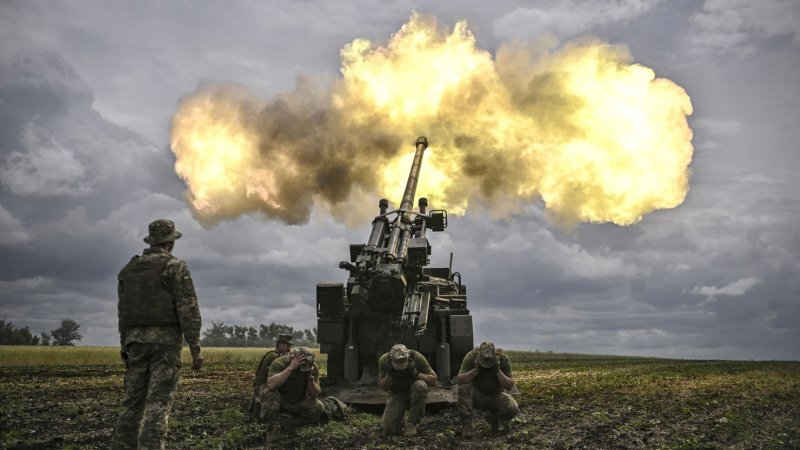 Ukrainian servicemen fire towards Russian positions at a front line in the eastern Ukrainian region of Donbas on June 15, 2022. Aris Messinis/AFP/Getty Images
P.S. As the conflict in Ukraine continues, the international community remains engaged in discussions about its long-term implications and possible resolutions. The war has highlighted deep geopolitical divisions and reinforced the importance of diplomacy, conflict resolution, and international cooperation. With no clear resolution in sight, the situation remains complex, shaped by ongoing military actions, political decisions, and humanitarian concerns. The economic, social, and psychological effects of the war are already significant and will likely be felt for years to come.
Rebuilding war-affected regions and addressing the needs of displaced populations pose major challenges for Ukraine. At the same time, the conflict has influenced global security dynamics, prompting many countries to reassess their defense policies, energy strategies, and geopolitical alliances in response to evolving tensions.
The international community continues to provide military, economic, and humanitarian assistance while also seeking diplomatic solutions. Discussions surrounding accountability for actions taken during the conflict, as well as the broader implications for international law and territorial integrity, remain ongoing. The future of Ukraine and regional stability will depend on a range of factors, including political negotiations, economic recovery efforts, and shifts in the global security landscape.
Regardless of how events unfold, the war has underscored the changing nature of international relations and the challenges associated with maintaining stability in a rapidly evolving geopolitical environment. The lessons drawn from this conflict may shape future approaches to conflict resolution, security cooperation, and international governance.


Similar news