Trump starts a new trade war with China, and Beijing strikes back


Photo: Getty Images
By Tural Heybatov
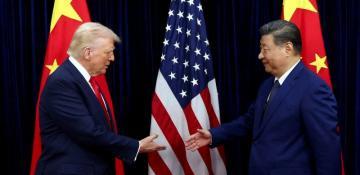
With Donald Trump’s election as U.S. president, the world is once again bracing for economic upheaval. A new round of trade wars, reminiscent of Trump’s first term, promises to be even more intense and far-reaching. China — the United States’ primary economic rival — is once again at the forefront of this confrontation.
Over the past four years, the Biden administration focused on weakening Russia through sanctions and financial restrictions, while China temporarily fell out of Washington’s direct line of fire. However, Trump’s recent statements suggest that his priorities will shift: he aims to restore relations with Russia, potentially at the cost of Ukraine’s territorial integrity, and focus on countering Beijing.New tariffs and economic escalation
Donald Trump has already announced plans to impose an additional 10% tariff on all Chinese imports entering the U.S. market. According to him, this measure is justified by Beijing’s alleged unwillingness to combat drug smuggling into the United States. During his election campaign, Trump also mentioned a potential 60% tariff on Chinese goods.
These measures mark a continuation of Trump’s earlier policies, when his administration waged a full-scale trade war against China between 2018 and 2019. At that time, restrictions led to increased costs for American businesses and slowed global economic growth. Analysts warn that the new wave of tariffs could be even more destructive, given the current state of the global economy, already weakened by the pandemic and military conflicts across Eurasia.
Beijing’s response: Strategic materials under ban
China wasted no time in responding. In December 2024, Beijing announced an immediate ban on exports of key strategic materials to the U.S. , including gallium, germanium, antimony, and superhard materials essential for high-tech industries. Additionally, China’s Ministry of Commerce tightened controls on the final use of graphite products exported to the United States.
Experts note that this is not merely a reaction to Trump’s actions but also a demonstration of China’s leverage in the global economy. China dominates the production of rare and strategic materials, controlling about 50% of the world’s antimony supply and playing a critical role in the rare-earth metals market. Without these resources, the production of semiconductors, microelectronics, and green energy technologies becomes nearly impossible.
Peter Arkell, Chairman of the Global Mining Association of China, told Reuters: “This is a trade war where there are no winners.”
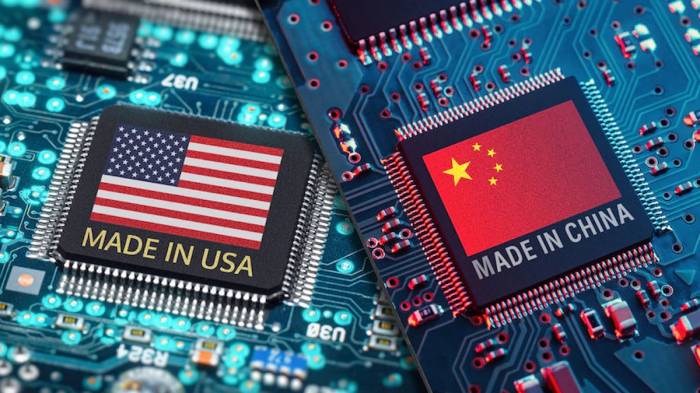
The US-China chip war has entered a new, debilitating phase. Image: Screengrab / News Video
Central Asia’s role: A New focus for the U.S. and Europe
Amid China’s restrictions, the U.S. and Europe have accelerated their search for alternative sources of rare-earth materials and strategic resources. Their attention has turned to Central Asia — a region rich in untapped mineral deposits that are vital for global industries.
Countries like Kazakhstan, Uzbekistan, and Tajikistan now find themselves in a difficult position. On the one hand, they are eager to attract Western investment and technology to develop their mining sectors. On the other hand, they face the risk of losing control over their resources and becoming overly dependent on external players.
China has already stepped in with proposals for long-term partnerships, offering assistance in developing rare-earth deposits under mutually beneficial terms. Unlike the U.S., Beijing emphasizes its policy of non-interference in the internal affairs of its partners, making its offer particularly attractive.
Meanwhile, Russia, despite holding significant reserves of rare-earth materials, remains preoccupied with its domestic priorities. However, Moscow is unlikely to step aside entirely, given the strategic importance of Central Asia for its geopolitical interests.
Consequences for the global economy
The new trade war between the U.S. and China could act as a catalyst for another global economic crisis. China’s role as a linchpin in the global supply chain means that restrictions on its exports will inevitably increase production costs for Western manufacturers and disrupt supply chains. Industries such as high technology, semiconductors, and green energy are expected to suffer the most.
For the United States, the trade war also carries geopolitical risks. By increasing pressure on Beijing, Washington is pushing China to strengthen its alliances with other countries, including Russia and the BRICS bloc. Trump has already expressed concerns about BRICS’ plans to create an alternative currency, which could challenge the dominance of the U.S. dollar in global trade.
The renewed U.S.-China trade war extends far beyond a bilateral dispute and has profound implications for global markets. Central Asia is emerging as a key arena in this economic confrontation, with regional states having to carefully navigate their relationships with China, Russia, and the West.
China’s decision to restrict exports of strategic materials underscores its willingness to protect its economic interests while leveraging its dominance in critical sectors.
Meanwhile, Trump’s “America First” agenda continues to prioritize U.S. economic sovereignty, despite the broader risks to the global economy.
In this escalating conflict, one thing is clear: trade wars do not produce winners. They only exacerbate economic instability, creating new challenges for a world already grappling with crises and uncertainties.


Similar news