Trump’s return: How U.S. foreign policy might change


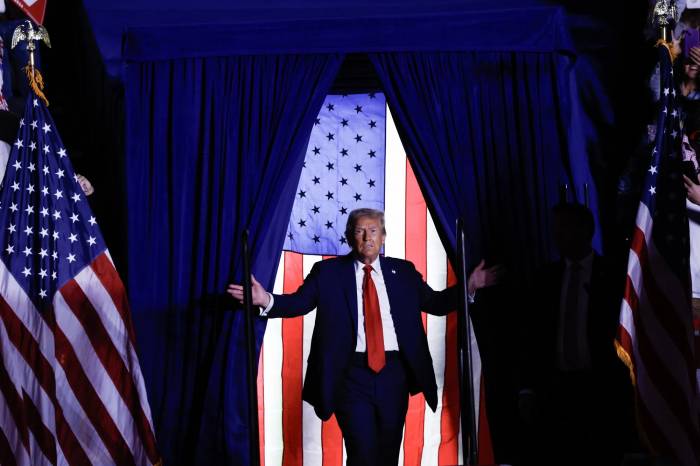
As Donald Trump hints at a potential return to the White House, discussions around his foreign policy legacy and its potential trajectory are intensifying. His administration’s hallmark “America First” doctrine disrupted conventional U.S. foreign policy, favoring transactional relationships over long-term alliances. This approach, while criticized by some as overly self-centered, resonated with those who viewed America’s global entanglements as burdensome. Should Trump reclaim the presidency, his policies could bring both opportunities and challenges to regions like Central Asia, the South Caucasus, and the theater of the Russian-Ukrainian conflict.
In Trump’s first term, Central Asia and the South Caucasus received limited direct attention, yet their strategic importance cannot be overstated. The region, rich in resources and located at the intersection of Russia’s and China’s spheres of influence, has long sought to balance these powers by engaging with the U.S. However, inconsistent American strategies have left these countries more reliant on Moscow and Beijing.The Trump administration demonstrated a willingness to engage with resource-rich nations, particularly when economic benefits aligned with American interests. For instance, Trump's emphasis on energy independence and economic diversification could lead to renewed support for initiatives like the Trans-Caspian Pipeline. Such projects would serve dual purposes: reducing Europe’s energy dependency on Russia and countering China’s Belt and Road Initiative (BRI).
Yet, Trump’s transactional approach raises concerns. Unlike his predecessors, who aimed for broader regional stability, Trump’s policies may focus narrowly on energy and trade, leaving gaps in political engagement. For countries like Azerbaijan and Kazakhstan, this could mean opportunities to strengthen ties with Washington—but only if they align closely with Trump’s economic priorities.
One of Trump’s most provocative claims has been his assertion that he could resolve the Russian-Ukrainian conflict within 24 hours. This reflects his self-image as a dealmaker capable of cutting through diplomatic red tape. Trump has argued that his personal relationships with leaders like Vladimir Putin and Volodymyr Zelenskyy would enable him to broker a swift resolution. His approach would likely involve freezing battle lines, compelling both sides into negotiations, and possibly softening Western support for Ukraine.
However, this pragmatic approach is fraught with risks. Critics argue that Trump’s willingness to pressure Ukraine into concessions could legitimize Russian territorial gains. His focus on reducing U.S. military aid and placing greater financial responsibility on European allies could also weaken NATO unity at a time when Moscow seeks to exploit divisions within the alliance.
From a strategic standpoint, Trump’s reluctance to commit to long-term military support could embolden adversaries like Russia, who may perceive a second Trump administration as less willing to enforce red lines. For Ukraine, this shift in U.S. policy might translate into diminished leverage in negotiations and an uncertain future.
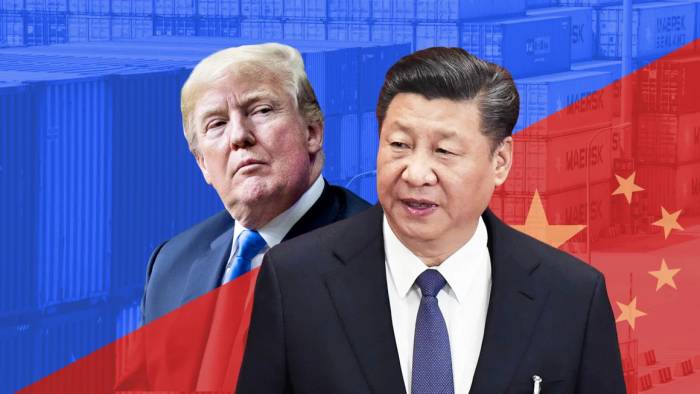
Under Trump’s leadership, countering China’s economic dominance became a central pillar of U.S. foreign policy. In regions like Central Asia, this manifested as opposition to the BRI and encouragement of alternative partnerships. Trump’s preference for bilateral agreements and economic pragmatism could appeal to nations like Uzbekistan and Turkmenistan, which seek to diversify their foreign relations.
However, Trump’s aversion to multilateral diplomacy could limit the U.S.’s ability to build cohesive coalitions in the region. Without consistent engagement, Central Asian states may continue to gravitate toward Beijing’s infrastructure investments and Moscow’s security umbrella. This balancing act will require Trump to prioritize strategic partnerships over short-term economic gains—a challenge given his transactional style.
In the South Caucasus, Trump’s approach may mirror his first term’s hands-off stance during the 2020 Nagorno-Karabakh war. While economic projects with Azerbaijan could see renewed focus, broader regional stability might not rank high on his administration’s agenda. The lack of a clear policy could leave the region vulnerable to escalating tensions between Russia, Turkey, and Iran.
Despite its critics, the “America First” doctrine resonated with many Americans who felt that U.S. foreign policy was overextended. Trump’s emphasis on domestic priorities, coupled with a preference for cutting financial commitments abroad, appealed to those who viewed alliances like NATO as burdensome. Yet, this inward-looking approach carries risks in a world increasingly shaped by great-power competition.
In Central Asia and the South Caucasus, Trump’s policies may offer opportunities for resource-rich nations to enhance economic ties with the U.S. However, these opportunities come with strings attached. Trump’s unpredictability and focus on short-term gains could undermine America’s ability to compete effectively with Russia and China in these strategic regions.
On the Russian-Ukrainian front, Trump’s proposed solutions highlight his pragmatic, deal-focused mindset. But they also raise concerns about the potential erosion of U.S. support for Ukraine and the long-term consequences of legitimizing Russian aggression. As global conflicts evolve, Trump’s leadership will face the test of balancing American interests with the need for regional stability and international credibility.
If Trump returns to power, his administration will likely redefine U.S. foreign policy across multiple regions. His focus on economic pragmatism and skepticism toward multilateralism represents a departure from traditional American diplomacy. For Central Asia, the South Caucasus, and Ukraine, this could mean both opportunities and challenges as they navigate a geopolitical landscape shaped by transactional politics.
Ultimately, Trump’s legacy will hinge on his ability to balance short-term economic benefits with long-term strategic goals. Whether he can rise to this challenge remains uncertain, but his return to the global stage would undoubtedly reshape the dynamics of great-power competition.
(If you possess specialized knowledge and wish to contribute, please reach out to us at opinions@news.az).


Similar news