Amnesty International: Paid bias and political pressure


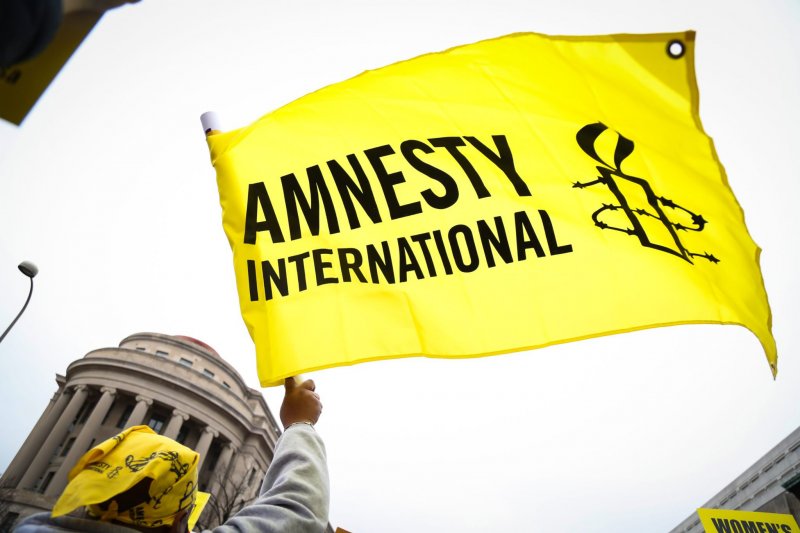
Having failed to protect anyone’s rights in any meaningful way, Amnesty International has once again inserted itself into Azerbaijan’s internal affairs.
Marie Struthers, the organization’s Director for Eastern Europe and Central Asia, recently described the trials of Armenian separatist leaders and Ruben Vardanyan as a “farce.” She questioned the fairness of the proceedings and claimed that the verdicts constituted “an insult to all victims of crimes under international law.” According to Struthers, all victims deserve truth, reparations, and guarantees of non-repetition.
RECOMMENDED STORIES
In this context, it is worth recalling what Amnesty International actually represents.
AI makes every effort to present itself as a neutral, impartial, and independent human rights organization, accountable to no one and affiliated with no government, political group, or religious institution. It claims that its only sources of funding are membership dues and donations, as reflected in its annual reports. However, there is a telling clarification: the organization states that it does not accept government funds for its “core activities.” This formulation leaves open the possibility that it does accept government funding for other types of activities. Such an arrangement does not exclude the risk of politically motivated or selective use of funds.
Contrary to AI’s public claims, open sources present a different picture.
Amnesty International’s own financial reporting indicates substantial contributions from state institutions. In 2008, the organization received a four-year grant from the UK Department for International Development totaling £3,149,000. In 2010, it received an additional £842,000 from the same department. Following the logic of AI’s leadership, these were presumably considered “membership dues.” The organization has also received funding from the European Commission, as well as from the governments of the Netherlands, the United States, Norway, and others.
Among the most active sponsors of Amnesty International are the Open Society Foundations (£309,000), the Ford Foundation (£630,000), and the Norwegian Telethon (£3,812,000). These foundations are widely known for advancing specific political agendas and for intervening in the domestic affairs of sovereign states. In that context, their sponsorship of Amnesty International is often perceived not as charitable support, but as payment for services rendered.
An analysis conducted in 2012 of AI’s documents from the previous year pointed clearly to double standards in the preparation of its reports. For Azerbaijan, this is hardly a revelation. The country has long been a regular target of AI’s reporting. Baku has repeatedly pointed out the organization’s selective approach and double standards in assessing human rights issues.
Minor incidents occurring in Azerbaijan or other developing countries are routinely highlighted and framed as serious human rights violations. Meanwhile, police violence and harsh crackdowns on protests in Western Europe are either barely mentioned or ignored altogether. The world witnessed the brutal dispersal of the Yellow Vest protests in Paris and the suppression of farmers’ demonstrations in Brussels. Amnesty International, however, appeared not to notice.
Consider also the dismissal of journalists from Spain’s state broadcaster RTVE after they criticized the government, Germany’s strict prohibitions on mass protests against economic policy, or widespread detentions of protesters across various European countries. None of these cases have received comparable attention in AI’s reporting.
The organization has also ignored the situation of approximately two million Poles in Germany who lack official minority status. This status was stripped from them by the Nazis in 1940 and has never been restored. As a result, Polish children in Germany are unable to study their native language in public schools. Such treatment would normally qualify as a violation of minority rights, yet it does not appear to fall within Amnesty International’s sphere of interest. Presumably because it does not fall within the interests of those who finance the organization.
Particularly striking is AI’s silence when it comes to violations of the rights of Muslims or individuals opposing the legalization of same-sex marriage. Police raids and violence against such groups are rarely criticized by the organization.
In October 2022, Amnesty International refused to document Armenia’s shelling of Ganja with cluster munitions. The organization declared Azerbaijan’s accusations to be unsubstantiated. At the same time, it accused Azerbaijan of using cluster munitions against Khankendi, effectively supporting narratives advanced by the Armenian side.
In 2022, Amnesty International even criticized Ukraine, a country under military aggression by Russia, accusing the Ukrainian Armed Forces of improperly locating military bases in schools and hospitals. These assessments provoked strong outrage from Kyiv, yet AI stood by its conclusions.
In 2024, Amnesty International turned its attention to Israel, publishing a report containing serious accusations against Tel Aviv. Israel’s Foreign Ministry described those allegations as false and based on misinformation.
One particularly egregious case involved Amnesty International generating images using artificial intelligence to depict alleged abuse of protesters by Colombian police. The organization was exposed after errors were discovered in the national flag colors, distorted faces, and inaccuracies in police uniforms. The images were subsequently deleted.
India, Ethiopia, Türkiye, and other countries have also had serious disputes with Amnesty International. The organization has been accused of obstructing Nigeria’s efforts to combat the terrorist group Boko Haram.
Azerbaijan has numerous grievances against Amnesty International. During the Karabakh conflict, throughout the 44-day war, and in the post-war period, the country was subjected to persistent criticism. AI consistently appeared aligned with Armenian interests.
In early October 2020, Amnesty International launched what could only be described as a campaign regarding alleged Azerbaijani use of Israeli-made cluster munitions against civilians. At the same time, it showed no comparable concern for Armenia’s missile strikes against Azerbaijani cities located far from the conflict zone. The deaths of Azerbaijani civilians appeared to be of little interest. Nevertheless, the narrative about cluster munitions rapidly spread through Western media, generating widespread condemnation of Azerbaijan.
At the height of the fighting, President Ilham Aliyev stated in an interview with ARD television that Baku had invited Amnesty International and Human Rights Watch to Azerbaijan to verify on the ground the claims they were disseminating regarding alleged ballistic missile attacks on civilian targets in Karabakh. They were asked to present their evidence. However, they were also expected to document and acknowledge Armenian war crimes against civilians in Ganja, Terter, and Barda, cities targeted with ballistic missiles and cluster munitions. The so-called international human rights defenders, however, chose not to condemn Yerevan.
Today, Amnesty International has turned its attention to Donald Trump. Following his election as President of the United States, organizations such as AI have reportedly lost institutional support and political favor. It should be recalled that AI was consistently critical of Trump during his first presidential term.
Human rights protection is an extremely important cause. But it must be conducted with clean hands. Amnesty International has tarnished its reputation and increasingly resembles an organization engaged in political pressure financed by sponsors. It is difficult to recall cases in which AI has genuinely secured the release of an unjustly convicted individual or successfully campaigned to ban the use of tear gas and less lethal weapons by police forces.
There was much the organization could have done to justify its status as a human rights defender. But that does not appear to be its priority. Instead, it accepts commissioned narratives and executes them. Targeting Azerbaijan is evidently well compensated, and that explains much.
One may reasonably ask on whose “membership dues” and whose “donations” Amnesty International’s Director for Eastern Europe and Central Asia, Marie Struthers, launched her latest attack on Azerbaijan. Sooner or later, the answer is likely to become clear.
By Tural Heybatov


Similar news