.png)
Ultimately, Azerbaijan emerged as one of the few countries in modern history to resolve a conflict not only on the military and political levels, but also on the legal and moral planes. This process showed that genuine peace is impossible without justice and that impunity for war criminals represents a continuation of conflict in another form. The Azerbaijani model demonstrated that justice can be achieved even after many years, and that decisive state will plays a crucial role in this process.
Justice after war: Azerbaijan proves war crimes do not go unpunished
Source: Trend
Editor's note: Faig Mahmudov is a journalist based in Azerbaijan. The views expressed in this article are his own and do not necessarily reflect those of News.Az.
The path Azerbaijan has taken in recent years is not merely a story of military victory or political superiority. Above all, it represents a rare historical phase in which law, justice, and state willpower were transformed into tangible force. In the contemporary system of international relations, very few countries can claim to have restored their territorial integrity and full sovereignty solely through their own strength while simultaneously ensuring legal accountability for crimes against humanity and war crimes committed against their people over decades. In this regard, Azerbaijan has established an exceptional precedent.
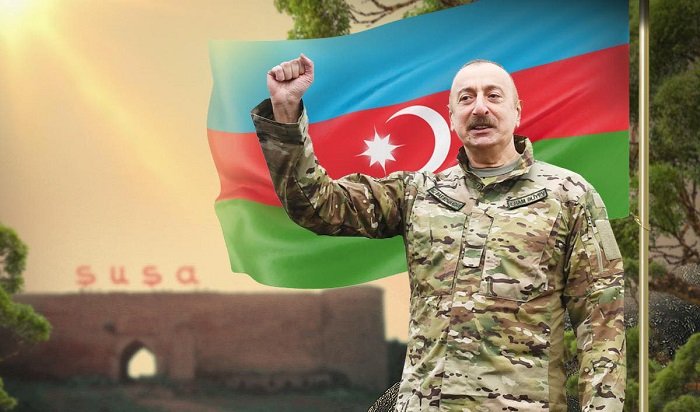
The ideological and political foundations of this process were laid well before the war itself. President Ilham Aliyev repeatedly stated that all grave crimes committed against the Azerbaijani people, including the Khojaly genocide, would not be forgotten and that those responsible would ultimately be brought to justice. These statements were not emotional appeals to a domestic audience. They reflected a clear strategic vision. The consistent steps taken afterward demonstrated that this vision was systematic and deeply embedded in state policy.
RECOMMENDED STORIES
With the restoration of Azerbaijan’s territorial integrity in 2020, the military phase of the conflict came to an end. However, this did not conclude the matter. A new stage began—one focused on shaping the legal consequences of the conflict. Historical experience shows that many conflicts formally end while those responsible for mass killings, forced deportations, and the torture of civilians remain beyond accountability. Such outcomes represent incomplete conflict resolution. Azerbaijan chose a different path and made a deliberate decision to bring the war to a conclusion in legal terms as well.
Source: Trend
The open trials held at the Baku Military Court became a central element of this approach. During the judicial proceedings, documentary evidence, material proof, testimonies from victims, and statements made by the accused clearly demonstrated that the occupation was not a series of isolated incidents, but a planned and systematic policy. It became evident that the Armenian armed forces not only conducted military operations on Azerbaijani territory but also carried out widespread violence against civilians, destroyed residential settlements, and grossly violated the fundamental principles of international humanitarian law.
One of the most significant aspects of the trials was the legal confirmation that Armenia had created a so-called regime in Karabakh to conceal its occupation policy. Investigation materials and testimonies established that this structure was not an independent political entity, but rather functioned as a mechanism for implementing Armenia’s political, military, and administrative decisions. The leadership of the so-called regime effectively served as key executors of Armenia’s occupation strategy.
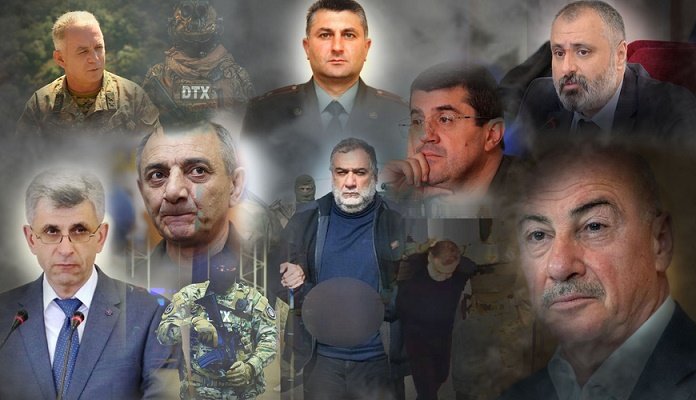
The court’s verdict marked the legal culmination of these findings. The life sentences handed down to Arayik Harutyunyan, Levon Mnatsakanyan, David Manukyan, Davit Ishkhanyan, and David Babayan confirmed that these individuals were central figures in both the planning and execution of the occupation policy. The court determined that they were directly involved in the preparation and conduct of an aggressive war, crimes against humanity, war crimes, acts of violence against the civilian population, terrorist activities, and the creation and management of illegal armed formations. Their actions were not isolated initiatives but part of an organized and deliberate system.

Source: AzerTAG
The ruling regarding Arkadi Ghukasyan also reflected Azerbaijan’s adherence to the principles of a state governed by law. The court fully proved his involvement in crimes against humanity, war crimes, and the political leadership of the occupation policy. However, in strict compliance with the Criminal Code of the Republic of Azerbaijan, he was not sentenced to life imprisonment due to having reached the age of 65. Instead, he received a 20-year prison sentence. This decision demonstrated that Azerbaijan does not deviate from the rule of law even in cases involving the gravest crimes.
The lengthy prison sentences imposed on other defendants were likewise based on the findings of the court investigation. It was established that these individuals participated in terrorist activities, war crimes, acts of violence against civilians, and the creation of illegal armed formations. As a result of their actions, dozens of residential areas were destroyed, thousands of people were forcibly displaced from their homes, and hundreds of civilians lost their lives.
These court proceedings also brought Armenia’s state responsibility into sharp focus. The testimonies and evidence presented showed that the crimes committed against the Azerbaijani people were not the result of individual actions but part of a state-level policy of aggression pursued by Armenia. The so-called regime functioned as an instrument designed to disguise this policy and mislead the international community.

Source: AzerTAG
Despite strong and unjustified political pressure from abroad, the president’s firm stance on this issue remained unchanged. Azerbaijan demonstrated that, as a sovereign state, it would not allow interference in its judicial system and would not retreat from the principle of restoring justice. This position sent a clear message not only to the domestic audience but also to the international community.
(If you possess specialized knowledge and wish to contribute, please reach out to us at opinions@news.az).
By Faig Mahmudov

Similar news