What will happen to the world if the West loses its influence


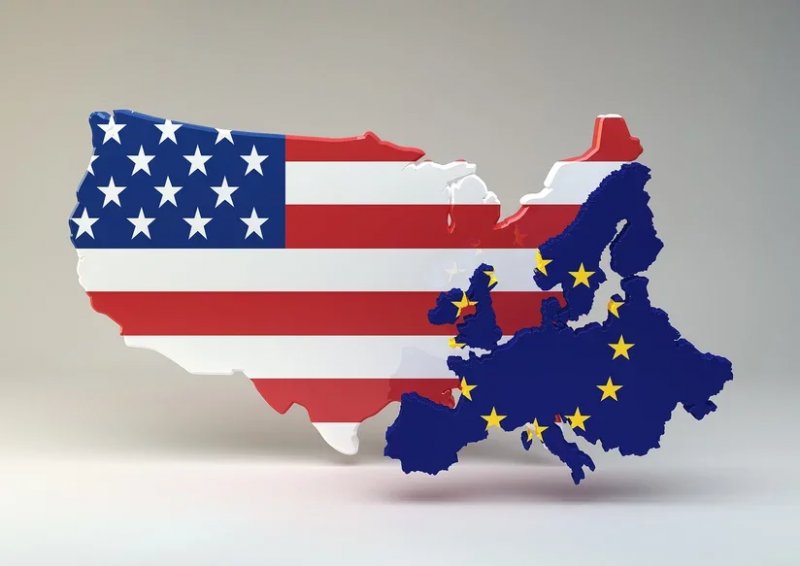
Not long ago, the global system appeared relatively stable and predictable. The West, understood broadly as the United States and its allies, did not merely dominate international politics; it defined the rules of the game.
Financial standards, security architectures, political norms, and even ideological benchmarks were largely shaped in Washington, Brussels, and allied capitals. Today, however, the question of what the world would look like if Western influence were to decline is no longer theoretical. It is increasingly discussed by policymakers, analysts, and diplomats because the contours of this transformation are already visible.
It is important to clarify from the outset that this is not about the sudden collapse or disappearance of the West. The United States and Europe remain among the world’s largest economies, technological leaders, and military powers. What is changing is something subtler but far more consequential: the gradual erosion of the West’s monopoly over global decision-making and over defining what constitutes a “universal” model of development. This shift is unfolding slowly, but precisely because of that, it is structural and difficult to reverse.
One of the clearest indicators of this change is the rebalancing of the global economy. In 1990, Western countries accounted for well over 60 percent of global GDP in nominal terms. Today, that share has significantly declined. According to IMF data, when measured by purchasing power parity, emerging and developing economies already produce the majority of global output. The BRICS grouping now surpasses the G7 in terms of share of global GDP by PPP, and projections by institutions such as PwC suggest that this gap could widen further by 2030. This is not a marginal statistical shift; it reflects a fundamental relocation of the world’s economic center of gravity away from the Atlantic and toward Asia and the broader Global South.
Global trade patterns tell a similar story. Over the past two decades, the share of the United States and the European Union in global merchandise trade has declined, while intra-Asian trade and South–South trade have expanded rapidly. China has become the largest trading partner for more than 120 countries, a position once held overwhelmingly by the United States. This transformation changes the logic of globalization itself. The world economy is no longer organized around a single dominant hub but around multiple, partially overlapping networks.
As Western influence weakens, the institutions that once embodied that influence are also under strain. Many of the international organizations established after World War II reflect the balance of power of the mid-20th century rather than contemporary realities. An increasing number of states argue openly that their representation and voice within these structures do not correspond to their economic or demographic weight. This perception undermines trust and encourages the creation of alternatives — regional development banks, new investment mechanisms, and payment systems that bypass traditional Western-dominated channels.
The financial dimension is particularly revealing. While the U.S. dollar remains the world’s primary reserve currency, its share in global foreign exchange reserves has declined from more than 70 percent in the early 2000s to around 58–59 percent today. This does not signal an imminent collapse of the dollar’s role, but it does point to a gradual diversification of the international monetary system. More trade is being conducted in national currencies, and more countries are seeking to reduce their exposure to a single financial center.
Economic decentralization brings both opportunities and risks. A world without a single economic “anchor” is more flexible, but it is also more volatile. In the past, global financial crises were often mitigated, though not always resolved, through coordinated action led by Western institutions. Today, such universal mechanisms are weaker. As a result, uncertainty increases, and regional shocks are more likely to have unpredictable spillover effects.
The implications for global security may be even more profound. For decades, the West, primarily through the United States and NATO, served as the central guarantor and regulator of the international security order. That role is now increasingly contested. According to SIPRI, global military spending has surpassed $2.4 trillion, reaching historic highs, with a significant portion of the increase coming from Asia and the Middle East rather than from Western countries. The ability to project power and shape security outcomes is no longer concentrated in a narrow group of states.
As Western “arbitration” weakens, regional conflicts are more often managed, or mismanaged, by regional actors themselves. This elevates the role of middle powers, ad hoc coalitions, and regional diplomacy. At the same time, it raises the risk of miscalculation and escalation. Fewer universally accepted rules mean that power politics becomes more explicit, and the cost of mistakes grows.
The ideological dimension of global politics is also changing. For decades, the Western model — liberal democracy, market capitalism, and a particular interpretation of human rights — was presented as universal and ultimately inevitable. A decline in Western influence does not imply the rejection of these values, but it does mark the end of their exclusive status. The world is becoming ideologically pluralistic. States increasingly assert the right to choose their own development paths based on history, culture, and pragmatic interests rather than external prescriptions. For some, this looks like the erosion of global standards; for others, it represents a long-overdue correction and a more honest acknowledgment of diversity.
In practical terms, a world in which the West no longer dominates will be harsher and more competitive. National interests will be articulated more directly, and pressure will be applied less subtly. Yet such a world may also be more balanced. Countries that once occupied the periphery of global politics gain greater room for maneuver and a chance to act as subjects rather than objects of international relations.
For small and medium-sized states, this new environment is both an opportunity and a serious test. Multipolarity rewards diplomatic skill, strategic flexibility, and the ability to maintain autonomy amid competing centers of power. At the same time, it punishes misjudgment. Errors in alignment or an overestimation of one’s leverage can be far more costly than in the relatively stable era of Western-dominated order.
The decline of Western influence, therefore, should not be seen as a catastrophe or as an automatic victory for alternative powers. It is a transition between eras, marked by turbulence, experimentation, and the search for new equilibria. The world is entering a phase in which there is no single center of truth, power, or moral authority. History is once again open-ended, and its outcome will depend not on slogans or ideology, but on the capacity of states to realistically assess the new landscape, adapt to it, and pursue long-term strategies in an increasingly complex and uncertain global environment.
By Asif Aydinli


Similar news