Azerbaijan’s integration path: Multi-vector diplomacy, connectivity, energy and multilateralism


In recent years, Azerbaijan’s international integration has increasingly followed a clearly defined strategic formula built on four core pillars: multi-vector diplomacy, connectivity and transport expansion, energy and green transition diplomacy, and active multilateral engagement.
Together, these pillars have transformed Azerbaijan from a country that merely participates in international processes into one that increasingly helps shape regional and global agendas. The period between 2024 and 2026, marked by major diplomatic events, infrastructure projects, and strategic partnerships, illustrates how these pillars function as a unified long-term integration strategy, News.Az reports.
Azerbaijan’s international integration is particularly visible in its activity on multilateral platforms, its hosting of global agenda-setting events, its energy partnerships with Europe, and its growing role as a logistics hub across Eurasia. This combination allows Azerbaijan to position itself not simply as a regional actor, but as a country contributing to priority-setting in diplomacy, energy security, and connectivity.
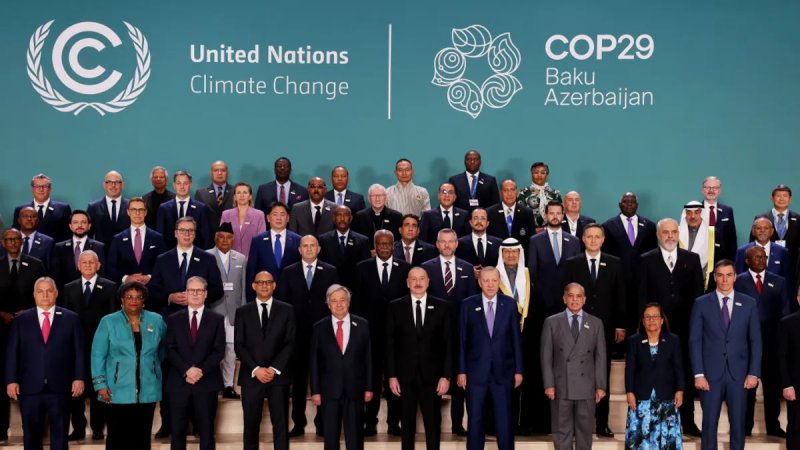
One of the most significant milestones in Azerbaijan’s recent international positioning was hosting the COP29 United Nations Climate Change Conference, held in Baku from November 11 to November 22, 2024. According to official sources, this was the largest international event ever organized by the country. International summaries of COP29 outcomes highlight key achievements, including agreements on the New Collective Quantified Goal for climate finance and the completion of regulatory frameworks related to Article 6 of the Paris Agreement governing international carbon markets.
The conference also strengthened Azerbaijan’s diplomatic visibility through high-level engagement, including the visit of UN Secretary-General António Guterres. Azerbaijan’s Foreign Ministry described the period as one marked by positive momentum in Azerbaijan–United Nations relations. From an integration perspective, COP29 elevated Azerbaijan from hosting routine diplomatic gatherings to serving as a platform for global climate governance discussions.
Azerbaijan’s growing influence is also reflected in its expanding role within multilateral organizations. The country concluded its chairmanship of the Non-Aligned Movement in 2024, officially transferring leadership to Uganda while continuing to participate actively in the troika format. Azerbaijan’s leadership role continues through its chairmanship of the Conference on Interaction and Confidence Building Measures in Asia for 2024–2026. The chairmanship theme focuses on connectivity, digitalization, and sustainable growth in Asia, and a CICA summit is expected to be held in Azerbaijan in 2026.
In December 2024, Azerbaijan was unanimously admitted to the Developing Eight organization, marking the first expansion of the group since its establishment in 1996. Within the framework of the Organization of Islamic Cooperation, official documents confirmed that Azerbaijan will host the OIC Summit in 2026, while several resolutions across political, economic, and humanitarian sectors were adopted in 2024. In addition, during the 2024 informal summit of the Organization of Turkic States held in Shusha, the Karabakh Declaration emphasized cooperation in transport connectivity and climate-related initiatives. These developments indicate that Azerbaijan has moved beyond simple membership in international organizations toward shaping leadership agendas.
Within the Organization of Islamic Cooperation, Azerbaijan has also strengthened its diplomatic position on humanitarian and historical justice issues. During the 51st session of the OIC, a resolution was adopted supporting the right of return of Azerbaijanis who were forcibly and systematically expelled from the territory of present-day Armenia. The adoption of this resolution reflects broader recognition of displacement-related issues and demonstrates Azerbaijan’s growing ability to mobilize multilateral diplomatic support on sensitive historical and humanitarian matters.
Azerbaijan’s cooperation with global institutions also extends to the social and development dimension of integration. The country signed the Decent Work Country Programme with the International Labour Organization for 2025–2029, focusing on job creation, strengthening social protection mechanisms, and safeguarding labor rights.
At the same time, cooperation with the United Nations continues within the framework of the United Nations Sustainable Development Cooperation Framework for 2021–2025. This framework supports Azerbaijan’s efforts to achieve the Sustainable Development Goals through joint policy coordination, institutional capacity building, and inclusive economic development initiatives. These partnerships demonstrate that Azerbaijan’s integration strategy extends beyond geopolitical and economic considerations to include human development and social sustainability.
Regional and bilateral diplomacy has also expanded significantly, with Azerbaijan pursuing a balanced approach across Europe, Asia, and the Middle East. In Central Asia, high-level interstate council meetings were held with Uzbekistan, Kazakhstan, and Kyrgyzstan, while President Ilham Aliyev participated as a guest at a major meeting in Astana on August 9, 2024.
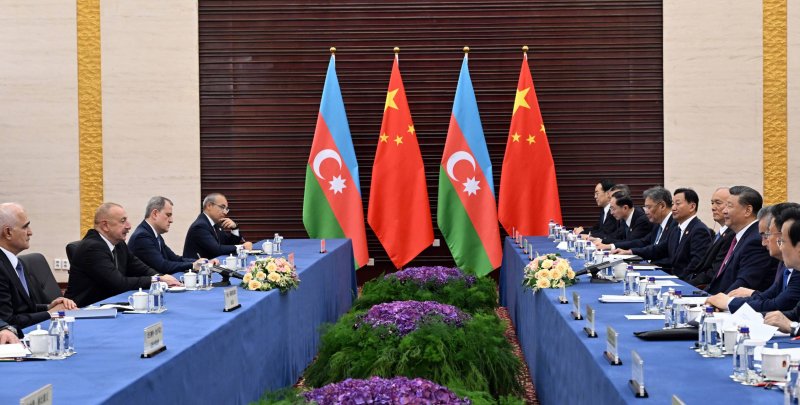
In Europe, presidential visits to Germany, the United Kingdom, and Italy strengthened bilateral relations, while cooperation with Serbia was elevated to the level of a strategic partnership. In Asia, an important milestone was reached on July 3, 2024, when Azerbaijan and China adopted a Strategic Partnership Declaration within the framework of the Shanghai Cooperation Organization summit.
At the same time, Azerbaijan continued to expand its diplomatic network, opening new embassies in Thailand and Oman, restoring the operations of Iran’s embassy, and increasing the total number of Azerbaijani diplomatic missions worldwide to 92.
Energy diplomacy remains one of the strongest pillars of Azerbaijan’s integration strategy. The European Union officially recognizes Azerbaijan as a strategic energy partner and underscores the importance of the Southern Gas Corridor for European energy security. Recent developments have reinforced this partnership. In January 2026, Azerbaijan’s state energy company SOCAR began supplying gas to Germany and Austria. A 10-year contract was signed with Germany’s SEFE company, covering approximately 1.5 billion cubic meters of gas annually, with additional volumes delivered to Austria. Earlier reports in April 2025 also highlighted discussions on European Union financing mechanisms, long-term contract policies, and the growing volume of Azerbaijani gas exports to European markets. These developments indicate that energy cooperation now extends beyond commercial supply to include infrastructure investment, political dialogue, and long-term strategic planning.
Transport and connectivity form another essential component of Azerbaijan’s integration model. The country’s strategy to become a major Eurasian transport hub is supported by concrete infrastructure projects and coordination initiatives. Azerbaijan Railways has implemented modernization projects along the Middle Corridor and the Baku–Tbilisi–Kars railway line. In 2024, Azerbaijan launched its first rail export shipment from Baku to China, demonstrating the operational expansion of transcontinental trade routes. Further strengthening coordination, on September 30, 2025, Azerbaijan, Kazakhstan, and Georgia signed an Action Plan aimed at eliminating logistical bottlenecks along the Trans-Caspian route. These developments enhance Azerbaijan’s role as a regional connector and increase economic interdependence across Eurasia.
Recent geopolitical developments also indicate that Azerbaijan is entering a new phase of international partnerships. In February 2026, a Strategic Partnership Charter was signed between the United States and Azerbaijan, covering cooperation in economic development, security, and technology. At the same time, international reporting suggests that Russia aims to maintain balanced relations with both Azerbaijan and Armenia amid the evolving regional political landscape. These developments underscore Azerbaijan’s continued multi-vector foreign policy approach, maintaining cooperation with multiple global power centers.
Overall, developments between 2024 and 2026 show that Azerbaijan is steadily strengthening its international integration through leadership roles in international organizations, enhanced global diplomatic visibility through major events such as COP29, deeper strategic energy cooperation with European partners, and rapid progress in transport infrastructure along the Middle Corridor. Azerbaijan’s integration strategy reflects a long-term transition toward becoming not only a participant in international systems, but also an increasingly influential actor capable of shaping regional and global agendas in diplomacy, energy, and connectivity.
The material was prepared with the financial support of the Media Development Agency of the Republic of Azerbaijan.


Similar news