Why China closely watches Elon Musk and Tesla


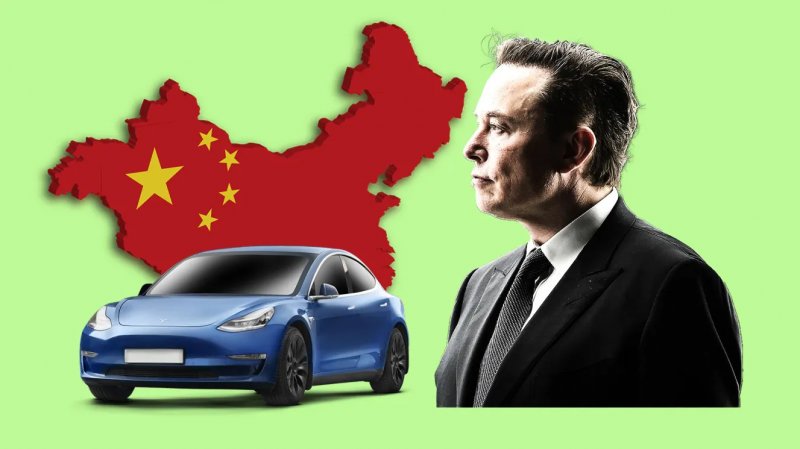
Elon Musk’s relationship with China has become one of the most fascinating and complicated stories in the global technology and automotive industries.
The billionaire entrepreneur behind Tesla, SpaceX, Starlink and several other high profile companies has been praised in China as a visionary innovator who helped transform the country’s electric vehicle sector.
RECOMMENDED STORIES
At the same time, he has also faced criticism from regulators, state media, consumers and military analysts over safety concerns, data security issues and the geopolitical implications of his growing technology empire.
Despite increasing competition from Chinese electric vehicle manufacturers and rising political tensions between Washington and Beijing, Musk continues to hold significant influence inside China. His latest visit to Beijing alongside senior American business leaders once again highlighted how important the Chinese market remains for Tesla and Musk’s broader business ambitions.
Below is a detailed FAQ style explainer examining why Elon Musk matters so much in China, why he remains controversial and what the future could hold for Tesla in the world’s largest electric vehicle market.
Who is Elon Musk in China?
In China, Elon Musk has long been viewed as more than simply a business executive. For many consumers, technology enthusiasts and entrepreneurs, he became a symbol of futuristic innovation, bold risk taking and technological disruption.
Chinese social media users have often described Musk as a “technology pioneer,” “global idol” and “Brother Ma.” His popularity surged especially after Tesla built its massive Gigafactory in Shanghai, which became one of the company’s most important manufacturing facilities worldwide.
Musk’s image in China differs from that of many Western corporate executives because he is associated not only with automobiles, but also with advanced technologies such as artificial intelligence, space exploration, robotics, satellite communications and renewable energy. These industries closely align with China’s own long term development goals.
Even Musk’s family has gained visibility in China. His mother, Maye Musk, has developed celebrity status in the country through fashion appearances, social media attention and public events.
However, admiration for Musk has not always translated into unconditional support. Chinese regulators and media outlets have increasingly scrutinized Tesla’s operations as the company’s influence expanded.
Why is Tesla so important to China?
Tesla played a transformative role in China’s electric vehicle industry.
In 2018, Tesla became the first foreign automaker allowed to establish a wholly owned manufacturing operation in China without being forced into a local joint venture. This decision marked a historic shift in Chinese industrial policy because Beijing had traditionally required foreign carmakers to partner with domestic companies.
China viewed Tesla as strategically valuable for several reasons.
First, Tesla accelerated the development of China’s domestic EV market. The company introduced advanced battery technologies, sophisticated vehicle software and new manufacturing standards that pushed Chinese automakers to innovate faster.
Second, Tesla helped stimulate consumer demand for premium electric vehicles. Before Tesla’s arrival, many Chinese consumers viewed EVs as lower quality alternatives to traditional gasoline vehicles. Tesla changed those perceptions by making electric cars appear modern, desirable and technologically advanced.
Third, Tesla strengthened China’s position in global EV supply chains. The Shanghai Gigafactory became a major export hub and helped integrate China more deeply into the international electric vehicle economy.
China eventually became one of Tesla’s most important global markets. The company sold hundreds of thousands of vehicles annually in China and generated a significant portion of its global revenue from Chinese consumers.
How did Tesla influence Chinese automakers?
Tesla’s impact on Chinese car manufacturers has been enormous.
Many Chinese automakers openly acknowledge that Tesla influenced their product strategies, software development and manufacturing approaches. During the pandemic period, while some traditional automakers struggled with supply chain disruptions and semiconductor shortages, Chinese firms carefully studied Tesla’s vehicles and business model.
Tesla’s emphasis on software integration, battery optimization and autonomous driving technology inspired many Chinese EV companies to move away from traditional automotive thinking.
Chinese manufacturers began focusing heavily on:
Battery efficiency
Over the air software updates
Smart cockpit systems
Autonomous driving capabilities
Integrated vehicle operating systems
Simplified manufacturing processes
Fast charging technology
Several leading Chinese EV brands, including BYD, NIO, XPeng, Li Auto and Xiaomi, rapidly improved their technology while competing directly with Tesla.
Executives from Chinese companies have openly stated that Tesla served as a benchmark for innovation. Chery’s chairman previously said the company aimed to combine Tesla’s innovative mindset with Toyota’s manufacturing quality standards.
Tesla effectively forced the entire Chinese automotive industry to accelerate modernization.
Why is Tesla now facing stronger competition in China?
Although Tesla remains influential, the competitive landscape in China has changed dramatically.
When Tesla first entered China, it enjoyed a clear technological advantage over many domestic competitors. That gap has narrowed significantly.
Chinese EV manufacturers now compete aggressively in nearly every category, including:
Vehicle price
Battery range
Charging speed
Autonomous driving features
Interior technology
Smartphone integration
Artificial intelligence systems
Vehicle customization
Domestic Chinese companies also benefit from deep knowledge of local consumer preferences and faster product development cycles.
BYD, for example, has emerged as one of the world’s most powerful electric vehicle companies. Xiaomi has entered the EV market with strong consumer interest, leveraging its technology ecosystem and smartphone user base. NIO and XPeng continue investing heavily in autonomous driving and premium smart vehicle features.
Chinese automakers are also increasingly expanding internationally, especially into Europe, Southeast Asia and the Middle East.
As Chinese firms become more competitive globally, some analysts believe Elon Musk’s prestige inside China could gradually decline.
Why do Chinese regulators criticize Tesla?
Tesla’s relationship with Chinese regulators has often been tense.
One major controversy erupted in 2021 after a customer publicly protested at the Shanghai Auto Show over alleged brake failures in her Tesla vehicle. Videos of the incident spread rapidly on Chinese social media and generated significant public criticism.
Chinese state media criticized Tesla’s handling of customer complaints and accused the company of arrogance. Tesla eventually apologized for not responding to customer concerns quickly enough.
The company has also faced broader scrutiny over:
Vehicle safety
Battery reliability
Customer service
Data collection practices
Use of onboard cameras
Autonomous driving marketing
Chinese authorities have become increasingly sensitive about data security and digital infrastructure. Because Tesla vehicles collect large amounts of data through cameras and sensors, regulators raised concerns about where that information was being stored and how it could potentially be used.
At one stage, Teslas were reportedly banned from entering certain military compounds and sensitive government areas due to fears over surveillance risks linked to vehicle cameras.
Tesla later increased its local data compliance efforts and reportedly stored Chinese user data within China to address regulatory concerns.
Why is SpaceX and Starlink causing concern in China?
China’s concerns about Elon Musk extend well beyond Tesla.
SpaceX and its Starlink satellite internet network have attracted growing attention from Chinese military analysts and policymakers.
Starlink became globally recognized for its role during the Russia Ukraine conflict, where the satellite system helped maintain communication infrastructure despite attacks on traditional networks.
Chinese analysts viewed this as proof that satellite internet systems could play a major strategic role in future conflicts.
Researchers linked to institutions associated with the People’s Liberation Army have publicly discussed concerns that the United States could deploy similar satellite capabilities during geopolitical tensions in Asia.
China has therefore accelerated development of its own satellite internet systems and space technologies to reduce dependence on foreign infrastructure.
Starlink’s rapid expansion has also highlighted the broader geopolitical implications of Musk’s business empire. Unlike traditional automakers, Musk controls technologies with potential military, communications and strategic applications.
This has complicated how Beijing views him.
Why does China still value Elon Musk despite tensions?
Despite criticism and growing competition, China still sees strategic value in Elon Musk and Tesla.
Many of Musk’s business interests align closely with Beijing’s technology priorities.
China continues investing heavily in:
Electric vehicles
Artificial intelligence
Renewable energy
Humanoid robotics
Autonomous driving
Advanced manufacturing
Space technologies
Brain computer interfaces
Tesla remains one of the world’s most influential EV companies and still possesses strong expertise in software integration and autonomous driving systems.
Chinese policymakers also recognize that competition with Tesla helped strengthen the domestic EV industry. Allowing Tesla into China accelerated innovation across the entire market.
Musk additionally represents a rare type of foreign entrepreneur who publicly praises Chinese manufacturing capabilities and maintains strong engagement with the country despite political tensions between Beijing and Washington.
What is Elon Musk currently trying to achieve in China?
Musk’s recent Beijing visit came at a sensitive time for both Tesla and the broader US China relationship.
Tesla is reportedly seeking expanded regulatory approval for its Full Self Driving assistance technology in China. Autonomous driving is viewed as a critical growth area for the company.
The company is also working to deepen relationships with Chinese suppliers, particularly in renewable energy and solar manufacturing.
Reports earlier this year indicated that Musk was exploring multibillion dollar purchases of solar equipment from Chinese companies.
At the same time, geopolitical tensions continue complicating US China business relations. Beijing has considered tighter export restrictions on certain advanced technologies, while Washington continues imposing restrictions in sectors such as semiconductors and artificial intelligence.
Tesla therefore operates within an increasingly difficult political environment.
Could Elon Musk lose influence in China in the future?
The biggest long term threat to Musk’s popularity in China may come from the continued rise of domestic technology champions.
Chinese consumers increasingly support local brands that now rival or surpass foreign competitors in several industries. National pride in Chinese technology companies has grown rapidly over the past decade.
If Chinese EV makers continue outperforming Tesla in affordability, innovation or autonomous driving technology, Musk’s image could gradually shift from industry leader to one competitor among many.
However, many analysts believe Musk will remain highly respected within China’s technology community because of the scale of his achievements across multiple industries.
Even critics acknowledge that Tesla helped transform the global electric vehicle market and pushed Chinese automakers to innovate faster.
His long term influence in China may ultimately depend on whether Tesla can continue adapting to a market that has become far more competitive and technologically advanced than when the company first entered the country.
Frequently asked questions
Why is Elon Musk popular in China?
Elon Musk became popular in China because Tesla helped modernize the country’s electric vehicle industry and introduced advanced technologies that influenced many Chinese automakers.
Why was Tesla allowed to operate without a Chinese partner?
China wanted to accelerate electric vehicle innovation, attract foreign investment and increase competition in the EV sector.
Why is Tesla facing criticism in China?
Tesla has faced criticism over customer complaints, safety concerns, data privacy issues and the handling of public controversies.
Why does China worry about Starlink?
Chinese analysts fear that satellite communication systems like Starlink could provide strategic advantages to the United States during future conflicts.
Is Tesla still successful in China?
Yes. Tesla remains one of the largest and most influential EV brands in China, although competition from domestic automakers has intensified significantly.
Which Chinese companies compete directly with Tesla?
Major competitors include BYD, NIO, XPeng, Li Auto, Xiaomi and Chery.
Could Tesla lose market share in China?
Yes. Chinese EV manufacturers are rapidly improving technology and offering competitive pricing, increasing pressure on Tesla’s market position.
Why is autonomous driving important for Tesla in China?
Tesla sees autonomous driving technology as a major future growth opportunity, and China is the world’s largest automotive market.
Does China still support Tesla?
China continues supporting electric vehicle development overall, but regulators are increasingly focused on balancing foreign influence with the growth of domestic technology companies.
Why is Elon Musk still influential despite controversy?
Musk remains influential because his companies operate in industries that are strategically important for China’s future technological ambitions.
By Faig Mahmudov


Similar news