Iran and the IAEA have completely parted ways


Russia is evacuating personnel from the Bushehr Nuclear Power Plant in Iran. On the eve of the move, Rosatom chief Alexey Likhachev said the process would continue as soon as the necessary conditions are in place. Employees evacuated on April 5 are already on the territory of Armenia. According to Likhachev, Rosatom has plans A, B, and C regarding Bushehr, but everything depends on the circumstances.
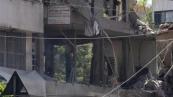
Despite repeated warnings from the International Atomic Energy Agency (IAEA), the Bushehr Nuclear Power Plant came under shelling on April 4. According to Tasnim, after a projectile fell within the territory of the first power unit, one security guard died from shrapnel wounds, and one building on the site was affected by the blast wave and fragments. The incident did not damage the main components of the plant and did not affect electricity generation. No increase in radiation levels was recorded.
RECOMMENDED STORIES
Iran had expected a strong statement from the IAEA following the incident. The lack of a tough response caused outrage in Tehran. The head of the Atomic Energy Organization of Iran, Mohammad Eslami, wrote in a letter to IAEA Director General Rafael Grossi that “inaction and the absence of condemnation by the IAEA of strikes on Iran’s Bushehr nuclear power plant could encourage the United States and Israel to continue attacking the facility.” He added that “this inaction, especially biased political interviews and statements by the Director General in the media, has emboldened the aggressors to continue these ruthless violations despite international rules and norms.”
Eslami accused the international organization, which limited itself to expressing deep concern, of effectively being complicit.
The IAEA head had no effective response to this. Overall, the situation has slipped out of control for all sides, including the International Atomic Energy Agency. Even in previous years, the IAEA was kept at a distance by Iran, but now control has been completely lost. Grossi himself acknowledged this in a recent interview with PBS Frontline, stating that the IAEA has lost oversight of nuclear facilities in Iran.
Source: nournews
“The situation in Iran has been a cause for concern. For quite some time, Iran has not provided the IAEA with access to operational sites, which has made it difficult to clarify circumstances and has led to a situation where we have lost the necessary continuity of knowledge to confirm that everything in Iran is being used for peaceful purposes. There are some worrying factors, including the accumulation of very large stockpiles of highly enriched uranium, almost weapons-grade, without any convincing justification,” Grossi said.
In March, in an interview with Russian journalists, Grossi stated that the IAEA cannot provide definitive proof that Iran has not been developing nuclear weapons. According to TASS, he emphasized that “given the very limited level of inspection access in recent years, the increase in uranium enrichment levels to near weapons-grade, and the significantly reduced access to Iran’s nuclear infrastructure, we cannot provide clear and visible evidence that such weapons have not been created.”
Iran completely stopped allowing IAEA inspectors access to its nuclear facilities after the 12-day war with Israel in June 2025. Before that, the agency had been allowed to conduct inspections. However, the day after the conflict ended, Iran’s President Masoud Pezeshkian issued a decree suspending cooperation with the agency. On June 25, the suspension was approved by parliament. Iran’s Deputy Speaker Hamid Reza Haji Babaei stated that Iran would no longer allow IAEA Director General Rafael Grossi to visit its nuclear sites and would not agree to the installation of surveillance cameras at those facilities.
The reason, once again, was the agency’s lack of a strong response to attacks on Iran’s nuclear sites.
On the night of June 18, 2025, the Israel Defense Forces (IDF) carried out strikes on centrifuge production facilities in Tehran and missile factories across Iran. Around 50 Israeli Air Force aircraft were involved in the operation, according to the IDF press service.
On the night of June 22, the United States struck key Iranian nuclear facilities in Fordow, Natanz, and Isfahan. The attack involved bunker-buster bombs and Tomahawk cruise missiles.
During the current war, throughout March, Israeli and US forces repeatedly targeted Iran’s nuclear infrastructure. Israel struck a nuclear facility in Yazd province, identified by media reports as a uranium extraction plant. It was described as a unique site in Iran where raw material undergoes mechanical and chemical processing for subsequent use in uranium enrichment.
US and Israeli strikes also hit the uranium enrichment complex in Natanz, the heavy water plant in Arak, and the uranium mining enterprise in Yazd.
The fall of a projectile on the territory of the Bushehr Nuclear Power Plant has seriously alarmed Tehran. The situation is so severe that Rosatom has begun evacuating personnel. For now, the IAEA appears helpless, limiting itself to expressions of concern and alarm.
It should be recalled that Tehran ratified the Treaty on the Non-Proliferation of Nuclear Weapons (NPT) in 1970 and signed a comprehensive safeguards agreement with the IAEA in 1974, under which the agency gathers information on nuclear facilities, inspects them, and verifies the peaceful nature of the nuclear program. After the Islamic Revolution in 1979, the program was halted, but later resumed.
Talk of Iran’s intention to acquire nuclear weapons began in the late 1990s. In 2003, the IAEA first reported signs of uranium enrichment by the country. Tehran did not deny this and, after signing an additional protocol to the NPT, announced it would suspend enrichment activities. However, the program resumed two years later, leading to sanctions against Iran. In 2015, an attempt was made to resolve the issue through the Joint Comprehensive Plan of Action. In 2018, the Trump administration withdrew from the agreement, and a year later Iran restarted its program.
Relations with the IAEA began to deteriorate in 2021.
Source: apnews
In early June last year, a statement by Rafael Grossi was published on the UN website ahead of a meeting of the IAEA Board of Governors, in which he said that until Iran answers all outstanding questions, the agency cannot confirm that its nuclear program is exclusively peaceful. Grossi noted that IAEA experts had found artificially produced uranium particles at three undeclared sites in Iran – Varamin, Marivan, and Turquzabad – to which the agency gained additional access in 2019 and 2020. Since then, the IAEA has been seeking explanations from Iran regarding the origin of these particles.
“Unfortunately, Iran has repeatedly either failed to answer our questions or provided technically unreliable answers,” Grossi said. “It also attempted to sanitize these locations, which hindered further verification by the agency.”
A comprehensive assessment by experts, based on all available technical information, led the agency to conclude that these three sites, as well as other possibly related locations, were part of an undeclared nuclear program conducted by Iran before the early 2000s, and that some activities involved undeclared nuclear material.
The consequences of this lack of cooperation were not long in coming. On June 13, Israel began bombing Iran. That war lasted only 12 days and did not achieve significant results in dismantling Iran’s nuclear program. However, it served as a kind of rehearsal for the current war.
The current conflict has now entered its second month, with no end in sight. The United States and Israel speak of dismantling Iran’s nuclear program, while Tehran insists that all its capabilities remain intact.
If this continues, the region faces a real explosion – not figuratively, but in the most literal sense of the word.
By Tural Heybatov


Similar news