Strategy behind Azerbaijan’s regional economic success


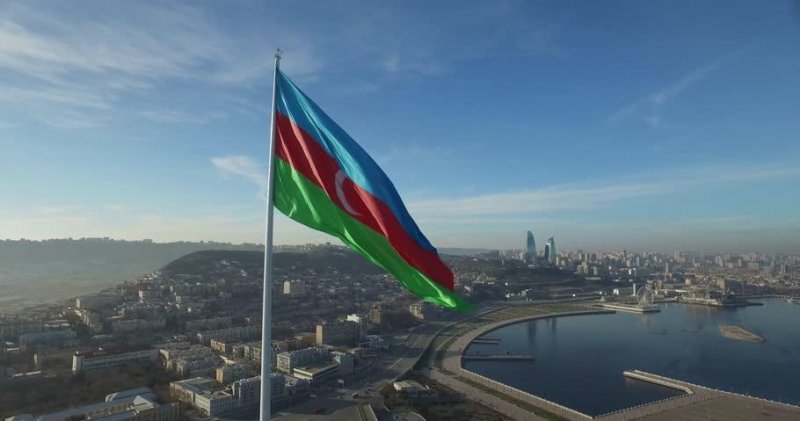
Since 2004, Azerbaijan has pursued a long-term policy of reducing development gaps between the capital and the regions by using multi-year state programs as its main instrument.
Across successive cycles, the overarching goals have remained consistent: expanding the non-oil economy, upgrading infrastructure and public services, creating jobs, improving living standards, and strengthening the investment environment in the regions, News.Az reports.
The first major framework was the 2004–2008 State Program, adopted in 2004. Its priorities centered on developing the non-oil sector, ensuring more balanced regional development, improving municipal services and social infrastructure, creating new jobs, and raising overall quality of life.
RECOMMENDED STORIES
This was followed by the 2009–2013 State Program, whose implementation was associated with strong improvements in macroeconomic indicators and notable progress in socio-economic development outcomes.
Next came the 2014–2018 State Program, which aimed to deepen macroeconomic stability and expand entrepreneurship in the regions. It also emphasized the launch of new enterprises and jobs, the delivery of large-scale infrastructure projects, and the upgrading of communal services, together supporting broader economic modernization outside the oil sector.
The 2019–2023 State Program continued the same trajectory, prioritizing ongoing socio-economic development in the regions through improved infrastructure and social services, along with higher employment and household welfare.
To carry this approach into the most recent period, the 2022–2026 Socio-Economic Development Strategy was prepared in line with "Azerbaijan 2030: National Priorities for Socio-Economic Development." The monitoring and evaluation of the strategy’s measures were assigned to the Center for Analysis of Economic Reforms and Communication, reinforcing a results-focused implementation model.
Across these policy cycles, the combined results presented include major job creation and business formation gains. More than two million new jobs were created, including 1.5 million permanent positions, and over 100,000 new enterprises were established. The unemployment rate declined to 5%, while the poverty rate fell to 5.1%.
In economic output and income-related indicators, the figures cited show significant expansion: GDP increased 3.2 times; the non-oil sector 2.6 times; industry 2.7 times; agriculture 1.5 times; investments and population incomes 6.5 times; and the average monthly salary 5.5 times.
A central theme of regional development policy has been “base infrastructure” that enables both better daily living and wider business activity.
One major example is gasification. During the 2025 budget discussions, the country’s gasification level was cited as 96.6%, with Nakhchivan reported at 100%, a foundational improvement with direct implications for household welfare and local economic activity.
Water-sector governance has also been described as undergoing institutional renewal, including updates to public administration arrangements and the presentation of performance indicators. In practice, this has been positioned as a management reform that supports planning, delivery, and reporting for regional water projects.
Transport links remain another pillar. According to the Azerbaijan State Agency of Automobile Roads, a long-run result reported over roughly two decades is 20,767.1 km of roads built, reconstructed, or repaired. As a more recent annual snapshot, 382.7 km of roads, avenues, and streets were reported as reconstructed or repaired in 2024, figures used to demonstrate continued investment in mobility and logistics.
Alongside physical infrastructure, “digital regionalization” has been treated as a new generation equalizer. Under connectivity initiatives, the number of households with broadband access was reported as increasing 12-fold, from 9% to 92%, with coverage described as exceeding 90% in 30 districts and 70–90% in 23 districts. Separately, Aztelekom project reporting cited an increase in average broadband speed, including a figure of 66 Mbit/s+ as of January 2024. In policy terms, these connectivity gains are framed not only as a quality-of-life improvement, but also as enabling e-commerce, remote work, and access to services such as education and digital public services across the regions.
The reconstruction and development track for the liberated territories has been presented as a special state-level model rather than a routine regional program. The “Great Return” framework is aimed at restoration, sustainable resettlement, infrastructure rebuilding, and economic revitalization in Karabakh and East Zangezur.
Within 2024 monitoring highlights attributed to the Center for Analysis of Economic Reforms and Communication, several implementation indicators were emphasized. More than 62,000 hectares were cleared of mines and unexploded ordnance. During 2024, over 1,400 families were relocated to areas including Lachin, Jabrayil, Fuzuli, Shusha, Khojaly, and other settlements.
On the social services side, six general education institutions began operating, the operation of three preschool institutions was ensured, and the opening of Karabakh University was noted (September 20).
Energy infrastructure indicators were also listed: 739 km of 110 kV lines and 262 km of 330 kV lines were laid; 11 substations of 110 kV and one substation of 330 kV were built. Financial access was presented through the expansion of services to six bank branches and the deployment of 904 POS terminals.
Economic activity was highlighted through industrial and employment-related developments. In Aghdam and the Araz Valley Economic Zone industrial parks, over 400 enterprises were reported as operating, and the start of exports from the Aghdam Industrial Park was specifically emphasized. Taken together, these indicators were framed as showing simultaneous progress across security, infrastructure, social services, settlement, and production, an integrated development approach rather than isolated projects.
Beyond nationwide frameworks, Azerbaijan has also used geographically targeted programs. For Nakhchivan, a dedicated 2023–2027 State Program was approved, presented with a detailed measures plan (including a formally available 2023–2024 stage). This approach is described as complementing the national regional development track by tailoring interventions to local conditions and priorities.
Regional development is also linked to culture policy, particularly through heritage protection, international visibility, and modernization of the creative sector.
A key initiative described is the Azerbaijan Culture – 2040 concept, approved in January 2026. Within that concept, six state programs are planned for preparation and implementation: development of the Azerbaijani language and literature; protection of cultural and natural heritage; development of the arts; development of the audiovisual industry; development of behavioral and knowledge culture; and development of cultural and creative industries. These programs are planned to cover 2026–2040 and to be implemented in three phases.
Heritage protection and international recognition are emphasized through UNESCO listings. Between 2003 and 2025, four cultural and natural heritage sites from Azerbaijan were cited as being included in the UNESCO World Heritage List: the Gobustan Rock Art Cultural Landscape (2007), the Historical Center of Sheki with the Khan’s Palace (2019), Hyrcanian Forests (2023), and the Khinalig cultural landscape and Köç Yolu (2023). In addition, the organization of more than 100 international festivals and over 60 Azerbaijan culture days was presented as part of a broader international cultural presence strategy.
Modernization measures also include digital transformation and human capital development in culture: the creation of an “e-culture” platform, training programs to improve digital skills among cultural sector employees, and professional capacity-building through study-abroad frameworks for culture-related specialties.
Sport has been presented as another pillar that supports regional vitality, youth engagement, and international visibility. Reported investments and outcomes include the construction of 46 Olympic Sports Complexes in the regions and the opening of new sports complexes in Ganja and Yevlakh. Athlete performance has been summarized in medal counts: more than 2,000 medals at international competitions, including over 600 gold medals.
Programs attributed to the Ministry of Youth and Sports of Azerbaijan include a state program focused on youth education, employment, and social protection; a volunteering program aimed at civic participation; startup and innovation programs that support youth initiatives; and the establishment of Youth Houses as modern spaces for socialization and development.
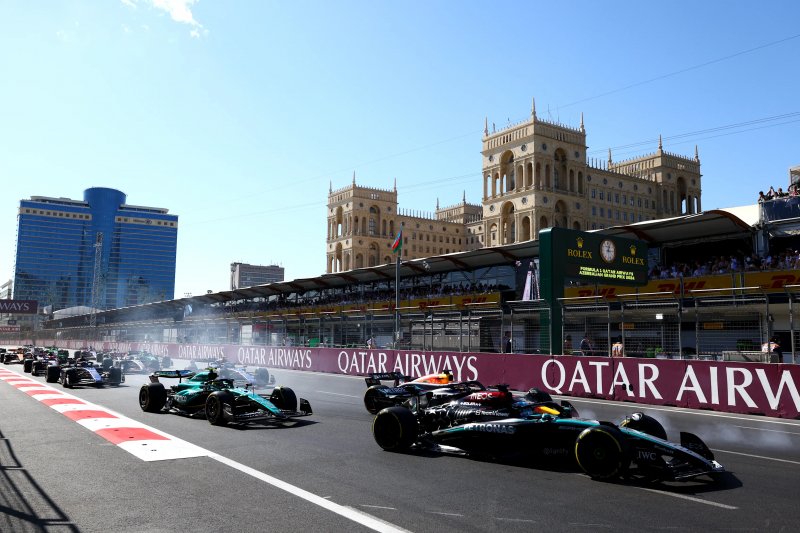
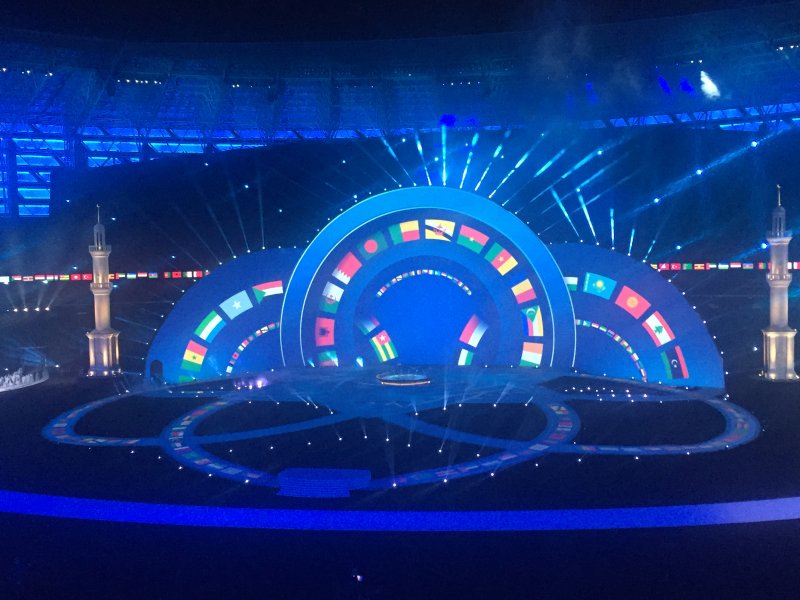
Hosting major international competitions is also part of the sports-development narrative. Events mentioned include the European Games, the Islamic Solidarity Games, Formula 1 races, and UEFA competitions matches, alongside other international tournaments, used to demonstrate both organizational capacity and the country’s international profile.
Across 2004–2023 state programs and the 2022–2026 strategic framework, Azerbaijan’s regional development model is presented as a mix of long-term planning and measurable delivery: jobs and enterprise creation, reduced unemployment and poverty, and broad upgrades in infrastructure, connectivity, and services. In the most recent period, the “Great Return” agenda for Karabakh and East Zangezur is described as a distinct, high-intensity development model combining demining, settlement, social services, energy networks, financial access, and industrial activity. Alongside economics and infrastructure, culture and sport are positioned as complementary engines that strengthen human capital, social cohesion, and international visibility, helping regional development function not only as an investment program, but as a whole-of-society modernization track.


Similar news